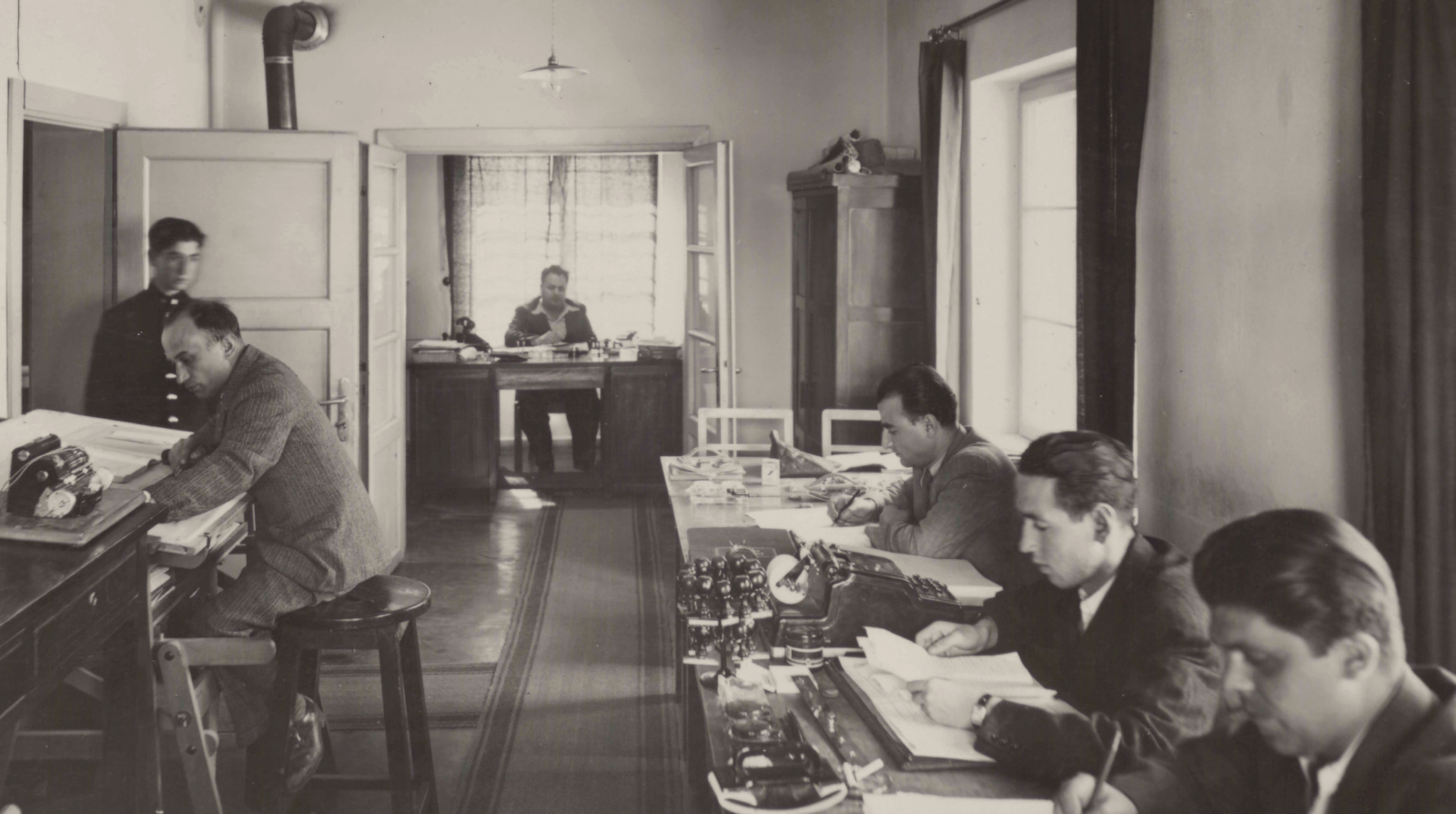
In the 102nd year of the Republic, Beykoz Kundura, one of the key witnesses to Türkiye’s history of industrialization, is opening a new chapter in its work to preserve industrial heritage and pass it on to future generations. Inaugurated on Saturday, October 25, the Kundura Hafıza Archive and Research Center is opening its doors to researchers as a multilayered research space born from the memory of a factory.
Having witnessed the country’s story of industrialization and modernization from the Ottoman era to the Republic, the Beykoz Deri ve Kundura Fabrikası (Beykoz Leather and Shoe Factory), with its distinctive character extending from production to social life, was not merely a factory but also a space of labor, solidarity and social transformation. Today, this heritage lives on through the archive and research work carried out under the umbrella of the Kundura Hafıza Cultural Heritage Preservation Association.
Its foundations laid by the Oral History Project launched in 2015, the center sheds light on Türkiye’s industrial, labor and cultural history with its comprehensive collection of testimonies from factory workers and their families, along with objects, photographs, documents and drawings related to production processes. Located in the former Nursery building of the Sümerbank Beykoz Deri ve Kundura Fabrikası, the Center opens to researchers not only its comprehensive collection, comprising the Sümerbank, Etibank, Sac Ambarı and Oral History archives, but also a specialized library focused on Ottoman and Republican-era industrial history, labor studies, and industrial and cultural heritage, with particular emphasis on the Sümerbank Beykoz Deri ve Kundura Fabrikası.
Established with inspiration from the technical library housed in the directorate building during the factory years, the Kundura Hafıza Library carries the Republic’s ideals of producing knowledge, sharing it and progress into the present day. With its rich collection focusing on Ottoman and Republican-era industry, economics and labor history, the experiences of women workers and cultural heritage, it offers a productive meeting ground for researchers.
The opening program began with a tour of the exhibition “Kundura’s Memory: A World Fit into a Factory”, which focuses on the 200-year history and social life of the Sümerbank Beykoz Deri ve Kundura Fabrikası, and continued with opening remarks by Erdi Yüksel, Kundura Hafıza Library and Archive Lead. As part of the day-long opening, Çelik Gülersoy Foundation İstanbul Library’s Hayri Fehmi Yılmaz, Vitali Hakko Creative Industries Library’s Begüm Başoğlu Öner and Bursa Metropolitan Municipality Bursa City Archive’s Dilek Yıldız Karakaş shared their experiences through the archive and memory work of their own institutions.
While discussing the historical development of their institutions, the ways in which they built their archives and collections, and their methods of providing access to and preserving information, the speakers presented examples touching on diverse fields such as urban history, the creative industries and cultural heritage. Bringing together the memory and archival practices of different institutions, this gathering created a rich environment for sharing, in which current approaches to library, archive and memory studies in Türkiye were discussed and the roles of institutions in producing and transmitting knowledge were evaluated.
Two special documentary screenings exploring the concepts of library and memory through narratives from different geographies, in November at Beykoz Kundura
As part of the opening of the Kundura Hafıza Archive and Research library, two very special documentary screenings will also meet audiences free of charge in November, opening up a discussion of the concepts of library and memory through narratives from different geographies. Screening on November 15 and 29, ‘Umberto Eco – A Library of the World’ approaches the library as a universe of thought, a space of imagination and a carrier of cultural continuity; meanwhile, screening on November 8 and 22, ‘How to Build a Library’ follows the initiative of two women in Nairobi who, confronting the shadows of the colonial past, turn the library into a stage for social transformation. The encounter between these two films invites us to reimagine the library not only as an archive of knowledge, but also as a living, organic universe of both individual and collective memory and of cultural resilience.
* The Kundura Hafıza Archive and Research Center will serve visitors by appointment.
About Beykoz Kundura
Beykoz Kundura is a multifaceted center for culture, arts and production built on the legacy of the Sümerbank Deri ve Kundura Fabrikası, one of the key witnesses to Türkiye’s history of industrialization, whose origins date back to the mid-19th century. Having witnessed the country’s industrial and social development from the Ottoman era to the Republic, the factory was restructured under Sümerbank during the Republican period and became not only a site of production but also a place of living, with its own hospital, nursery, cinema and social facilities. In this respect, Beykoz Kundura holds a unique place among Türkiye’s early industrial complexes.
With the transformation that began in the 2000s, the building complex was given a new function with the aim of preserving its industrial heritage and bringing it together with cultural production. Today, alongside its cinema, stage, exhibition and workshop programs, Beykoz Kundura carries the memory of the past into the present through the Kundura Hafıza Archive and Research Center and, by offering an inspiring environment for the creative industries and artistic production, stands out as a pioneering example that brings together industrial heritage and contemporary cultural production.
About Kundura Hafıza Archive and Research
Kundura Hafıza Archive and Research holds a rich collection that sheds light on Türkiye’s industrial history from the Ottoman era to the Republic. Made up of the archives of institutions such as Sümerbank and Etibank, first and foremost the Beykoz Deri ve Kundura Fabrikası, the collection carries the factory’s cultural heritage into the future through photographs, documents, objects and oral history recordings.
While the Oral History Collection, launched in 2015 in collaboration with the History Foundation (Tarih Vakfı), gathers the testimonies of more than 200 factory workers and their families, the Sac Ambarı Collection preserves more than 5,000 objects related to the factory’s production and social life, and the Sümerbank and Etibank collections bring together thousands of images and documents on Türkiye’s industrial past.
About Kundura Hafıza Learning Programs
Kundura Hafıza approaches learning not merely as the transfer of knowledge, but as a process intertwined with experience, inquiry and creativity. Through its children’s and adult workshops, Kundura Hafıza aims to enable participants to explore the venue, question heritage and engage in creative production; while the children’s workshops reach children free of charge with activities such as robotic coding, collage, architecture, landscape design and leatherwork, the adult workshops offer industrial heritage-themed practices such as paper, leather and glass crafts. As part of the public programs, the permanent exhibition “A World Fit into a Factory” conveys the factory’s history, production processes and social life to students and the public.
Oral history workshops and the “Vardiya” program give participants experience in production and research through archives and art. The summer school and teacher training programs spread awareness of cultural heritage and enable knowledge to be passed on to others. While events such as panels, films, festivals and memory walks build a bridge between past and present, accessibility is ensured through sign language tours and digital content. All these programs make it possible for participants to experience and share the past and to spread awareness of cultural heritage throughout society.
About the Kundura Hafıza Library
Housed within the Kundura Hafıza Archive and Research Center—established to preserve, study and pass on Beykoz Kundura’s industrial heritage—the library is a specialized library that complements the archival work under way since 2015. Re-established with inspiration from the technical library that served in the directorate building during the factory years, this space carries on the factory’s tradition of producing and sharing knowledge.
Comprising approximately 5,000 works, the collection focuses on leather and shoe production as well as Ottoman and Republican-era industry, economics, labor history and cultural heritage. Enriched by personal donations in addition to printed sources from the Sümerbank and Etibank archives, the library collection also includes Prof. Dr. Arzu Öztürkmen’s personal library in the fields of oral history, performance studies and folklore.
With its archive and library, the Archive and Research Center forms a productive meeting point for researchers from diverse disciplines such as history, economics, sociology, architecture and design.
For detailed information:
Evrim Eylem Şişman • e.eylemsisman@gmail.com • 0554 348 80 26