13 April 2021
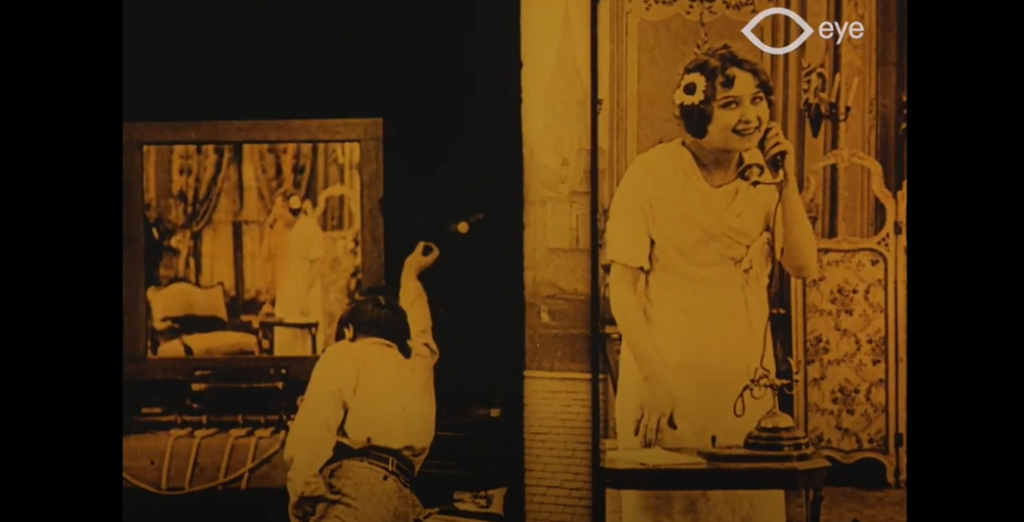
Since the beginning of 2020, the world has gone through a rapid process of digitalization. As a result, holding meetings on split screens has made it possible for participants from all over the world to come together on a single platform, and it has become part of our daily routine. But did you know that split-screen technology, and perhaps even the first applications of changing the background image, were actually used in silent films at the beginning of the 20th century? In those days, a telephone conversation or a daydream was best told with the split-screen technique. And that is not all: the different body measurements of a stunt double were resized with the same technique and matched to the size of the actor in question. A few materials were needed for this.
You can see a subtle example of split-screen technology in the science-fiction comedy Amour et Science (1912), featured in the final part of “Cinema’s First Nasty Women,” a selection compiled around the theme of “Nasty Women,” which you can watch on Kundurama until April 19. The film tells the story of the revenge that a young woman named Daisy plays on her fiancé, who has invented a kind of “Zoom/Skype” prototype. Daisy’s fiancé, the male inventor Max, invents what is in a sense the prototype of FaceTime or Zoom, and this nearly a century before our time. So how did women instantly grasp the potential of this device, and how did they use it?
*Katharina Loew’s presentation was given at Domitor’s Early Cinema Conference held in November 2020. https://domitor2020.org/en-ca/split-screen-effects-and-early-cinema/