23 September 2021
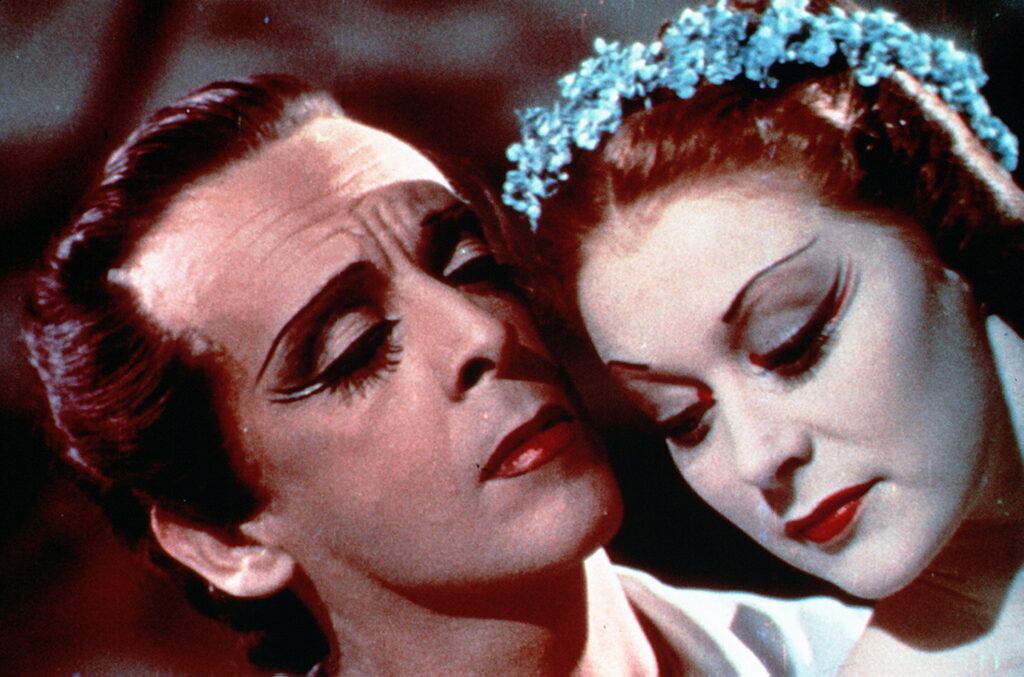
Altyazı Cinema Magazine writer Aslı Özgen takes a closer look at a film screened at the open-air cinema at Beykoz Kundura as part of A SUMMER NIGHT FESTIVAL: “The Red Shoes.” Adapted by Michael Powell & Emeric Pressburger from the fairy tales of Hans Christian Andersen, the Technicolor musical “The Red Shoes” offered audiences enchanting scenes on the big screen.


Dating from 1948, immediately after the Second World War, The Red Shoes turns its lens not on the destruction of everyday life but on the power of art, at a time when Europe was struggling to heal the wounds of war. With this choice, it stands out as an almost anachronistic work. 1948 was the year the Marshall Plan came into effect, the year when, along with American capital, cultural propaganda and cultural products began to dominate the European market. It was the year Bicycle Thieves (Ladri di Biciclette) was shot in Italy. It was a period when the devastation of war and poverty, and the wounds they inflicted on bodies, minds and souls alike, were increasingly portrayed on screen. Now imagine The Red Shoes amid such a bleak state of mind. We find ourselves in a veritable belle époque universe: luxurious, opulent interiors dominated by warm colors, crowded parties, flamboyant stage performances, the dreams of art-loving characters, a fairy-tale romance kindled on the French Riviera… It is hard to find a trace of the devastation of the Second World War in any frame of the film. The film’s directors, Michael Powell and Emerick Pressburger, as if wishing to keep the story’s timelessness alive as they adapted this Hans Christian Andersen tale, set the film itself in a kind of timelessness: no clue is given as to when the story takes place. Is it really the belle époque, the aftermath of the First World War, the years before the Second World War, or another time altogether… We don’t know. The film’s timelessness makes it appealing to today’s audiences as well (when The Red Shoes returned to movie theaters in 2009 after being restored in a big-budget project, it was received with great enthusiasm.)
The film begins in London, opening with a group of idealistic young people flocking into a large theater to watch the latest performance of the Lermontov Ballet Company. While the students can’t stop singing the praises of their conservatory teacher, the composer and conductor Palmer, a couple sitting next to them (who speak with a slight accent, perhaps hinting at Russian origins) interrupts: “Who cares about Palmer? We came here to see Irina Boronskaya; she’s the real star.” In the moments that follow, we do indeed witness Palmer’s godlike image crumbling piece by piece, and we gradually grow curious about Boronskaya. Palmer has in fact stolen the ballet’s music from his talented student Julian Craster. Disillusioned, Craster leaves the theater. From the very first moment, then, the film whispers that the men who have made great names for themselves and been idolized in the world of art and show business are not to be trusted. The young talent Craster, who moves to the center of the story, and Lermontov, the director of the ballet company, will also emerge as devilish figures later in the film.
At the center of the film is Vicky Page, an ambitious and passionate young ballet dancer. Vicky first strives to catch the attention of Lermontov, director of the most prestigious ballet company. But her real chance comes when Boronskaya, the company’s prima ballerina, decides to marry. Believing that art and love cannot go together, Lermontov dismisses Boronskaya from the company and makes Vicky an offer in her place. He hires Craster to compose the music for the ‘Red Shoes’ ballet he is preparing, and sets his sights on Vicky for the lead role. As the ballet is readied for the stage, we watch Lermontov turn into a perfectionist, demanding taskmaster. Shutting themselves away in a hotel in Monte Carlo, they work tirelessly, without pause. Lermontov on one side, Craster on another, the choreographer Grischa on yet another: Vicky is suddenly surrounded by men telling her how to dance, how to behave, what to eat and drink. Insults and humiliations are a dime a dozen. “You’re not a horse … You must take flight like a flower swaying in the wind, like a light bird,” Craster pontificates in one scene. Vicky, for her part, voices how heavy the body is, and how no one realizes that, even though it may not look that way from afar, dance is very heavy and hard.
This crowded, claustrophobic and chaotic universe comes to an end with the premiere of the Red Shoes ballet. Lasting about 17 minutes, the ballet performance is extraordinary and possesses an aesthetic richness rarely matched in the history of cinema. So much so that describing and analyzing this intricate richness in a way that does it justice could fill pages. On the one hand, this section functions almost like an “intermission,” a break, and is positioned in the film as a sequence independent of the plot. After so many chaotic, crowded, noisy, dialogue-heavy passages, here we can breathe a little, surrendering ourselves solely to the image on screen and letting ourselves be carried by its flow. We become so light that we get caught on the hem of Vicky’s billowing tulle dress as her body is swept from one side of the frame to the other. The camera, too, works almost as part of the dance choreography. With wonderfully fluid and dynamic camera movements, at times we follow Vicky, at others we slip between the dancers like a ghost drifting across the stage. It is not only the camera that imitates the dance; the editing, too, lends an extraordinary rhythm to this sequence. Long takes in which the camera glides along are suddenly cut, here and there, with a static close-up, and in this way we touch the shifts of emotion on the characters’ faces, in their eyes, in their bodies. In the dynamism of the sequence, it is impossible not to feel French Impressionism’s passion for rhythm and the musicality of the European avant-garde. Indeed, a kind of “cinema of attractions” aesthetic, which was itself a source of inspiration for the European avant-garde, unfolds before our eyes. Here the boundaries between cinema and ballet blur. Just as ballet is an art centered on visual language, so is (silent) cinema… Body, rhythm and movement are key to conveying meaning and emotion. This sequence builds its language by drawing on what these two arts have in common.
The Red Shoes ballet sequence also works as a kind of meta dimension that adds a further layer of commentary to the film’s story. In this sequence, we move away from the third-person narrative perspective used in the rest of the film and enter Vicky’s mind for the first time. Again in a way reminiscent of French Impressionism, we touch, through Vicky’s subjectivity, her experience, impressions, affects, dreams, fantasies and fears. In a sequence that begins in a realistic (objective) register, the boundaries between reality and fantasy, dream and hallucination gradually blur. Within the dance and the music, Vicky surrenders herself to the fairy tale’s world of imagination. One scene dissolves into another, one body vanishes into another; in place of the audience a rolling sea appears, in place of the dancers a flower, a bird. Amid these hallucinations, in place of the dancers who haunt her and symbolize the devilish curse, Vicky sees now Craster, now Lermontov… These two men, who made her life unbearable while she prepared for the ballet, take shape in Vicky’s mind as devils. In the sequence’s rich symbolic world, such fantasies also work as foreshadowing. In other words, through the sequence’s impressionistic narration we both see, for the first time, how Vicky experiences the world of the film and witness a prophecy. For, just as in the Red Shoes ballet, Vicky too will lose her life on the path down which the red shoes lead her. Lermontov, symbolizing ambition, on one side, and Craster, symbolizing love, on the other, will drain the life out of Vicky like a pair of incubi.


Film writer and scholar Ian Christie notes that the gender politics of The Red Shoes are generally overlooked. Yet one of the film’s important layers of meaning is the portrait it paints of male and female roles. For Christie, The Red Shoes in this respect reflects the gender politics of the post–Second World War era quite faithfully. In this period, an increasingly conservative discourse about women’s place in society becomes widespread: a woman’s place is in the home, with her family. Christie points to statistics showing that in this period, especially in Britain, many young women stopped working after they married. This is the real crux of tension in the film for audiences of the time: will Vicky choose her career or her husband? The film’s final word, too, wavers between these two poles. The early flirtation between Vicky and Julian Craster has a fairy-tale romanticism. After she defies Lermontov and leaves the company, however, we see them one night trying to sleep in separate beds: the bedroom is in icy dark blues and grays. We are far from the passionate romanticism with which Monte Carlo’s warm colors set the screen ablaze. Craster has followed his dreams, stepped into opera, which he believes to be a higher art form than ballet, and composed his first opera. A few scenes later, we hear that Vicky has drifted far from her dreams and no longer dances.
Aware of Vicky’s passion for dance and of her unhappiness, Lermontov offers her the chance to come back and dance the Red Shoes ballet once more. Vicky accepts, since she sees no contradiction between dance and love, but Craster expects a sacrifice from her: that she give up the stage. In these final sequences, as the film increasingly turns into melodrama, Vicky is portrayed as the victim of a struggle between two clashing men. Vicky wants to follow her passion, to dance, to be a successful ballerina. But Lermontov sees her as a “project,” and what really matters to him is his own personal ambition. Craster is no different. For the sake of his own personal ambition and pride, he expects Vicky to give up her dreams; he sees her as his property and doesn’t even ask what she wants.
In the film, the red shoes also symbolize these two poles. In the Red Shoes ballet, for example, they represent ambition, glory and the desire to be admired. In this respect, they become a symbol of the international fame and success Vicky longs for. To dance is to live; to stop dancing is to give up on life. Being seized by an insatiable ambition on this path can bring ruin. In the film’s final scene, however, the symbolic meaning of the red shoes changes. Preparing to go on stage for the first time after a long break, Vicky is torn; Craster has left her because of this choice. Just as she is about to step onto the stage, the shoes this time mindlessly chase after love (here Vicky’s feet move backward involuntarily; one could even infer that love is presented as something that holds her back, that stops her in her tracks). She runs swiftly toward Craster. In the end, for Vicky, trapped between the two roles cut out for her, existence becomes impossible. Vicky’s death at the end of the film with the red shoes on her feet, just as in the ballet, can also be read as a symbolic death. The film’s last word is almost an existentialist statement. With her last breath, Vicky says, “take off the red shoes”…