05 August 2026
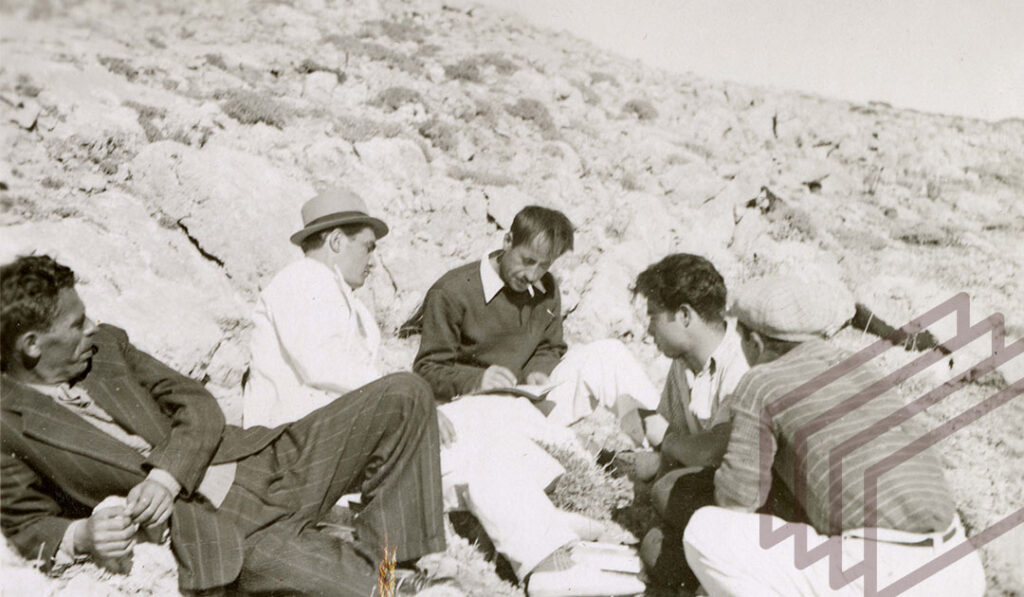
For most of the 20th century, historical writing set out to explain social structures, institutions and long-term historical processes rather than individuals. From the 1980s onward, however, under the influence of social history, microhistory and history-from-below approaches, the experiences of women, workers and other social groups that had previously found only limited space in historiography moved back to the center of research.[1] This shift also made it possible to treat biographies and autobiographies not merely as literary genres recounting individual life stories, but as works that help reassess established narratives about the past. Part of a broad body of writing that documents human life, (auto)biographies, together with personal testimonies such as memoirs, diaries, letters and oral history interviews, make the everyday experiences of the past visible. Drawing on the social sciences, psychology in particular, personal narratives make it possible to examine an individual’s life, their perception of life and the relationships they form with others, together with the social context in which they live. [2] Thanks to these qualities, (auto)biographies record the working culture, professional experiences, everyday practices and individual testimonies that official documents often leave out of view, while offering researchers the opportunity to assess the social, economic and cultural fabric of a given period in a more holistic way. In this respect, (auto)biographies are among the important historical sources that complement archival documents and are drawn upon in social science research, particularly in history and economics.
Memoirs and other personal narratives, with (auto)biographies foremost among them, hold an important place in the growing library collection of the Kundura Hafıza Archive and Research Center. The collection includes a variety of works containing the life stories, memoirs and personal testimonies of workers, engineers, doctors, chemists, tanners, trade unionists and managers who worked not only at the Beykoz Deri ve Kundura Fabrikası (Beykoz Leather and Shoe Factory) but also at various Sümerbank establishments and other industrial enterprises. Bringing together testimonies from different professional groups and generations, these publications make it possible to read the history of the Beykoz Deri ve Kundura Fabrikası and Sümerbank through the experiences of the people who shaped its production processes, through working relationships, professional know-how and institutional culture, while offering a multilayered perspective on how institutional memory takes shape.
[1] Ateş, Ömer F., and Şahmurat Arık, “Sorunsalları, Tarihsel Gelişimi ve Temsilcileri Bağlamında Biyografi Teorisine Genel Bir Bakış,” YAZIT Kültür Bilimleri Dergisi 2 (1): 134.
[2] Brian Roberts, Biographical Research (Buckingham : Open University Press, 2011), 52.
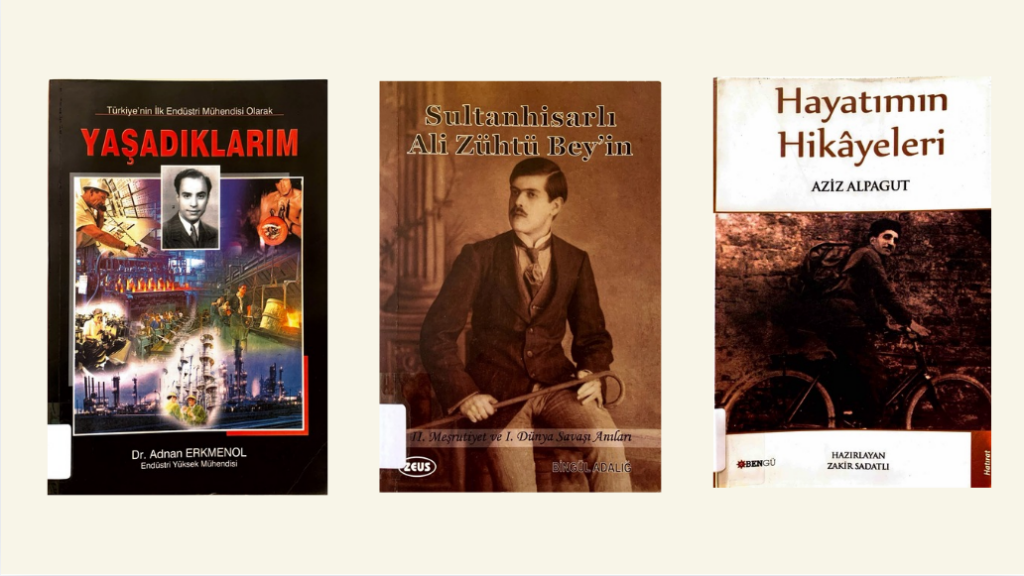
Among the highlights of the collection, Adnan Erkmenol’s book Türkiye’nin İlk Endüstri Mühendisi Olarak Yaşadıklarım (My Life as Türkiye’s First Industrial Engineer) traces the career of Erkmenol, one of Türkiye’s first industrial engineers, which began with a post as an organization officer at Sümerbank and continued with his tenure as director of the Beykoz Deri ve Kundura Fabrikası between 1960 and 1963, and later as deputy general manager at İPRAŞ and Şişecam. Devoting considerable space to his time at the Beykoz Deri ve Kundura Fabrikası, Erkmenol describes the factory’s modernization process in detail from a manager’s perspective. Alongside technical transformations such as the restructuring of production organization, the move toward mass production, the streamlining of workflows and the raising of quality standards, he also shows how this process was shaped by international transfers of knowledge and technology. As he recounts the attempts to adapt the model of the Bat’a Factory in Czechoslovakia to Beykoz, the collaborations with Czech engineers and the efforts to set up modern production systems, Erkmenol also explains how the experience gained on technical study trips to Sweden, Denmark and other European countries contributed to the factory’s renewal. In addition, through his testimony about life in the Beykoz staff housing, the social facilities, factory culture and the engineers, managers and master craftsmen he worked with, he emphasizes that Sümerbank was not only a production institution but also functioned as a “school” that generated technical knowledge and trained qualified personnel. The book thus stands as an important testimony that documents the institutional memory of the Beykoz Deri ve Kundura Fabrikası, the industrialization of the Republican era and its modernization policies from the perspective of a manager and engineer.
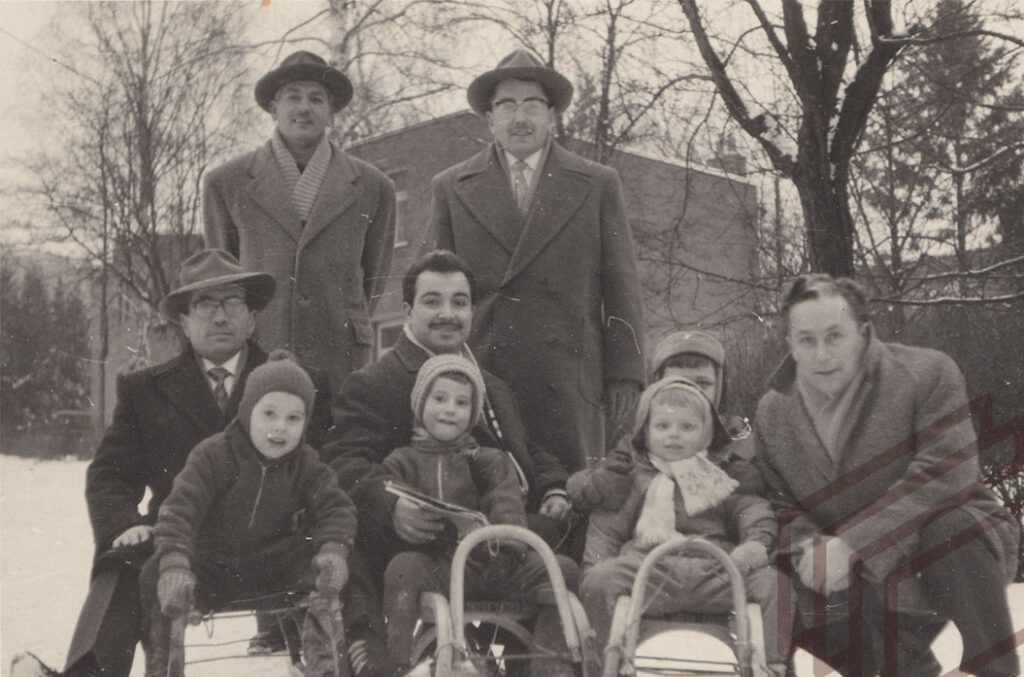
Image: From the family archive donated by Süleyman Caymazer to the Kundura Hafıza Archive and Research Center. Süleyman Caymazer served as General Secretary of the Factory’s Union between 1950 and 1976 and was sent to Czechoslovakia for machine training in 1963.
In the book Bir ‘İç Pilav’ın Kırk Yılı Bir İçmimarın Anıları (Forty Years of an ‘İç Pilav’: Memoirs of an Interior Architect), Gözen Küçükerman recounts the professional experience gained as an interior architect at the Architecture Office of the Sümerbank General Directorate between 1963 and 2007. Enriching this personal narrative with observations about the architects, engineers and craftsmen they worked alongside, Küçükerman describes the institution’s architectural and interior design projects, such as stores, factory social facilities, trade fairs, bank branches, exhibitions, staff housing and guesthouses, while also shedding light on the development of the interior architecture profession in Türkiye and on the design approach of the period. Küçükerman regards Sümerbank not merely as an industrial enterprise engaged in production, but as an institution that, with the expert staff it trained and the architectural and design approach it embraced, had the character of a “school” and contributed to the Republic’s process of modernization and institutionalization.
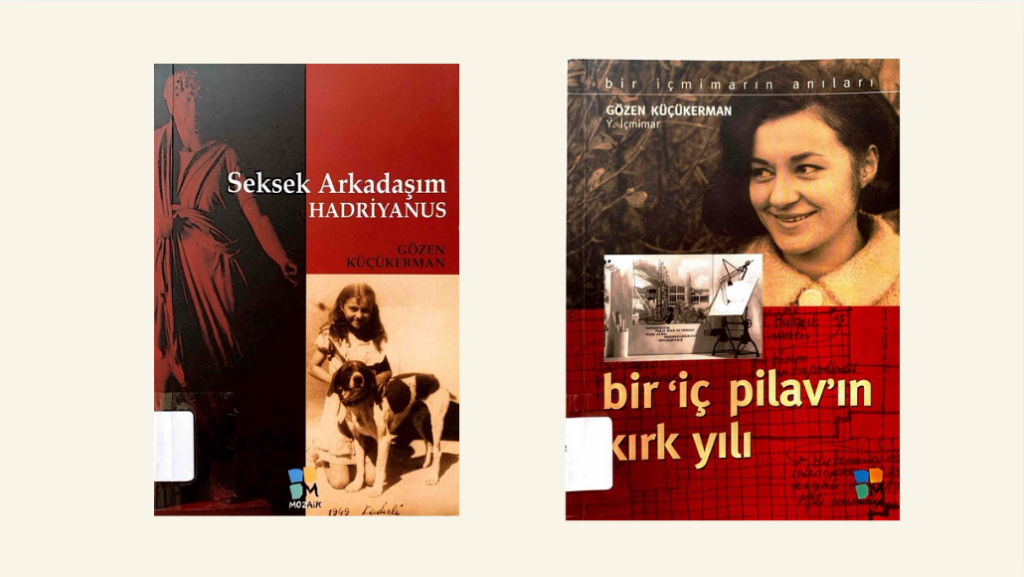

Image: Project drawing of “Arasta,” the sales store of the Sümerbank Beykoz Deri ve Kundura Fabrikası (Donated to Kundura Hafıza by Gözen Küçükerman. Küçükerman worked as Manager of the Sümerbank Store in Ankara between 1963 and 1988.)
In his memoir Şişe Cam’da Otuz Yıl (Thirty Years at Şişe Cam), Lütfü Ak draws on a working life that began in 1941 at the Paşabahçe Şişe Cam Factory to describe the factory’s founding years, its production processes, master-apprentice relationships, the effects of World War II on production, working conditions and technical developments. While sharing his observations on the factory’s managers, his coworkers and the master craftsmen, Ak devotes extensive space to the founding of the Şişe Cam Union, union struggles and worker-employer relations. He also addresses everyday practices such as religious holidays, circumcision celebrations, social events and worker solidarity, producing a comprehensive narrative that documents the institutional culture and collective memory of the Paşabahçe Şişe Cam Factory through an insider’s testimony.
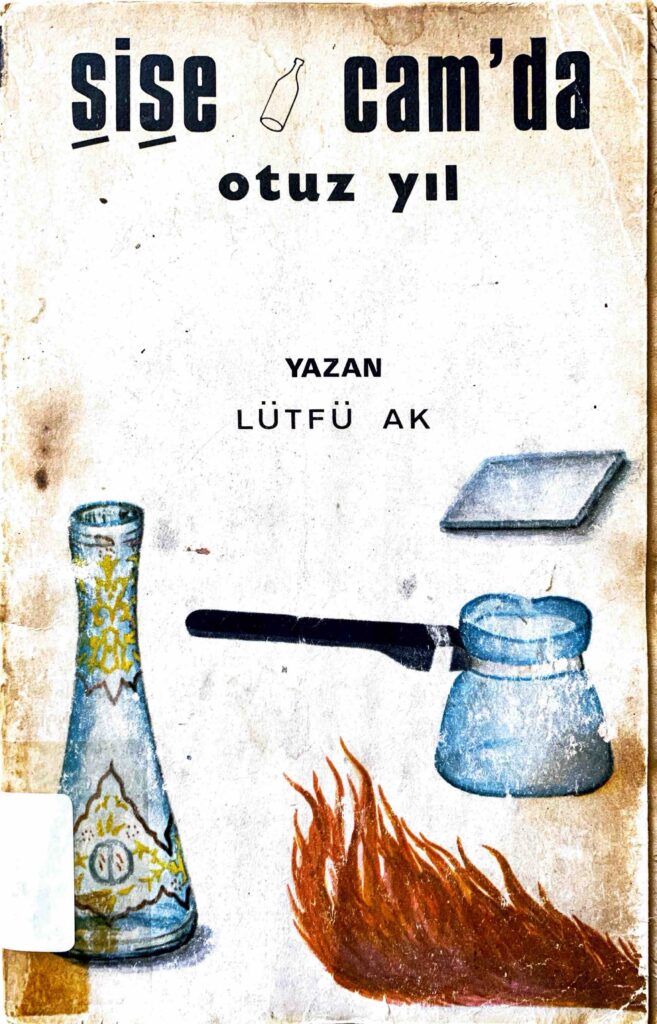
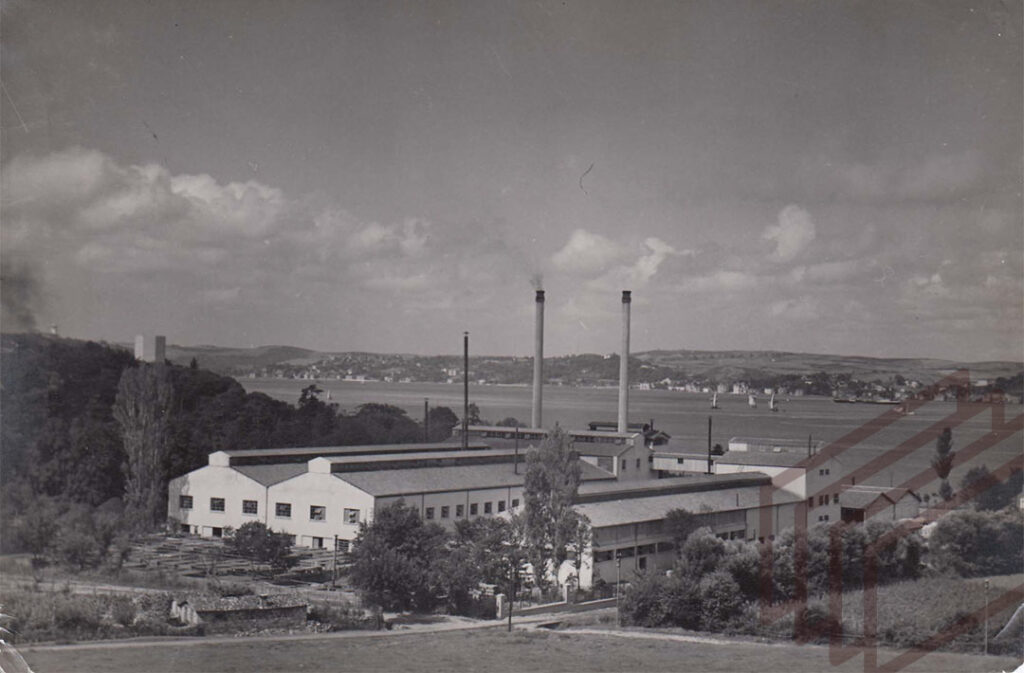
Image: Beykoz Paşabahçe Şişe Cam Factory (Kundura Hafıza Archive)
In his works Kayseri Şeker Fabrikası’nda İz Bırakanlar: “Bayraklı Belgeseli” (Those Who Left Their Mark on the Kayseri Sugar Factory: The “Bayraklı Documentary”) and Kayseri Şeker Fabrikası Belgeseli: Söğütlü Kahvenin Müdavimleri (The Kayseri Sugar Factory Documentary: Regulars of the Söğütlü Coffeehouse), Ziya Şahin examines the founding of the Kayseri Sugar Factory, its production activities and the factory’s impact on city life. He also covers the transportation and housing problems of the workers, cooperative initiatives, the Şeker Tepe Houses, social facilities, services for employees such as the hospital and school, and the culture of solidarity that developed around the factory. Going beyond official institutional history, the author expresses his aim of recording the testimonies and personal narratives of different employees in the following words:
“In this book, I have included the memories of those who worked at the Sugar Factory, far removed from any kind of formality. In doing so, I wanted to remember with gratitude the people who gave their labor and to put on record the struggle they waged for this cause.”[3]
[3] Şahin, Ziya. Kayseri Şeker Fabrikası’nda İz Bırakanlar: “Bayraklı Belgeseli” (Ankara: Gülnar Yayınları, 2024), 15.
Şahin’s works make it possible to view the Kayseri Sugar Factory not merely as a production facility, but as a social institution that, through its employees, its social life and the culture of solidarity it fostered, built a community around itself.
Sultanhisarlı Ali Zühtü Bey’in II. Meşrutiyet ve I. Dünya Savaşı Anıları (The Second Constitutional Era and World War I Memoirs of Ali Zühtü Bey of Sultanhisar), edited for publication by Bingül Adalığ, brings to today’s readers the diaries of Ali Zühtü Bey, who did his military service in the Ottoman period at the Beykoz Debbağ ve Kundura Fabrikası (Beykoz Tannery and Shoe Factory). The memoirs of Ali Zühtü Bey, who served as a clerk at the factory, then attached to the Levazımat-ı Umumiye Askeriyesi (the army’s General Supply Directorate), offer detailed information on the administrative structure, production organization and working life of the factory in the period when it was still a military institution. The narrative also lets readers follow the daily lives of the employees, the social environment around the factory and the working conditions that changed during the war years. Examples such as the factory switching to round-the-clock production to meet the army’s needs after the outbreak of World War I, the difficulties in obtaining raw materials, and the leatherworking materials from German ships seized in the harbor being brought into the factory reveal the direct effects of the war on industrial production. In Ali Zühtü Bey’s account, the Beykoz Factory is portrayed as a place governed by strict discipline, yet also as one of the modern industrial enterprises of its day, lit by electricity and equipped with a bathhouse, a dispensary and other amenities provided for its employees. In this respect, the work is an important memoir that bears witness from the inside to the military period of the Beykoz Deri ve Kundura Fabrikası, its production practices and its working life.
Another name encountered in the history of the Beykoz Deri ve Kundura Fabrikası is Aziz Alpagut, a leather specialist of Azerbaijani origin. After his training at the Freiburg Tanning School, Alpagut went to work at the Beykoz Deri ve Kundura Fabrikası in 1927, and he tells his life story in his autobiography Hayatımın Hikâyeleri (Stories of My Life). His life, which began in Baku and was shaped by years of arrest and exile following the Soviet occupation, brought him to Türkiye and to Beykoz. In his autobiography, he also briefly touches on his efforts to introduce new production methods such as chrome tanning during his years in Beykoz, and on the experience he gained in the process. In 1957, Alpagut also published a technical book on leatherworking titled Tatbiki Dericilik (Applied Leatherworking). Bringing together Alpagut’s life story and his expertise in leatherworking, these two works make visible the international circulation of knowledge in the early Republican era, in which the Beykoz Deri ve Kundura Fabrikası also took part.
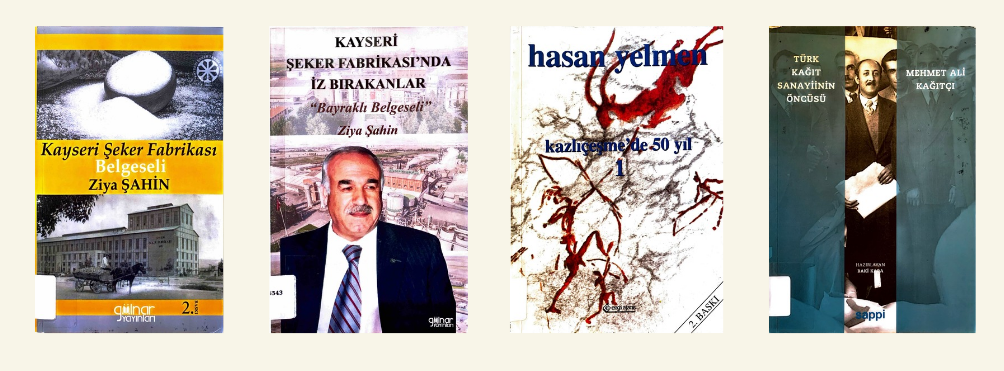
These narratives, stretching from Ali Zühtü Bey to Aziz Alpagut and from Adnan Erkmenol to Gözen Küçükerman, make visible the institutional memory of the Beykoz Deri ve Kundura Fabrikası and Sümerbank across a broad span of time, from the Ottoman period to the Republican years, through the testimonies of different professional groups and generations. Bringing together the testimonies of people from a range of professions, these works shed light on the multilayered history of the factory, from production processes to modernization efforts, from the transfer of technical knowledge and professional experience to working culture, and from social life to the formation of institutional identity. Biographies and memoirs thus do more than relate individual life stories; they stand out as important historical sources that complement official documents, at times question them, and open up new areas of interpretation and research for scholars. In this respect, the biography and memoir collection forms one of the most distinctive and steadily growing sections of the Kundura Hafıza Library relating to the history of the Beykoz Deri ve Kundura Fabrikası and Sümerbank.
All of the publications mentioned can be consulted in the library of the Kundura Hafıza Archive and Research Center.
Erdi Yüksel (Kundura Hafıza Library and Archive Manager)
BIBLIOGRAPHY
Ateş, Ömer F., and Şahmurat Arık, “Sorunsalları, Tarihsel Gelişimi ve Temsilcileri Bağlamında Biyografi Teorisine Genel Bir Bakış.” YAZIT Kültür Bilimleri Dergisi 2 (1): 130-153. Brian Roberts, Biographical Research. Buckingham : Open University Press, 2011. Şahin, Ziya. Kayseri Şeker Fabrikası’nda İz Bırakanlar: “Bayraklı Belgeseli”. Ankara: Gülnar Yayınları, 2024.