27 May 2024
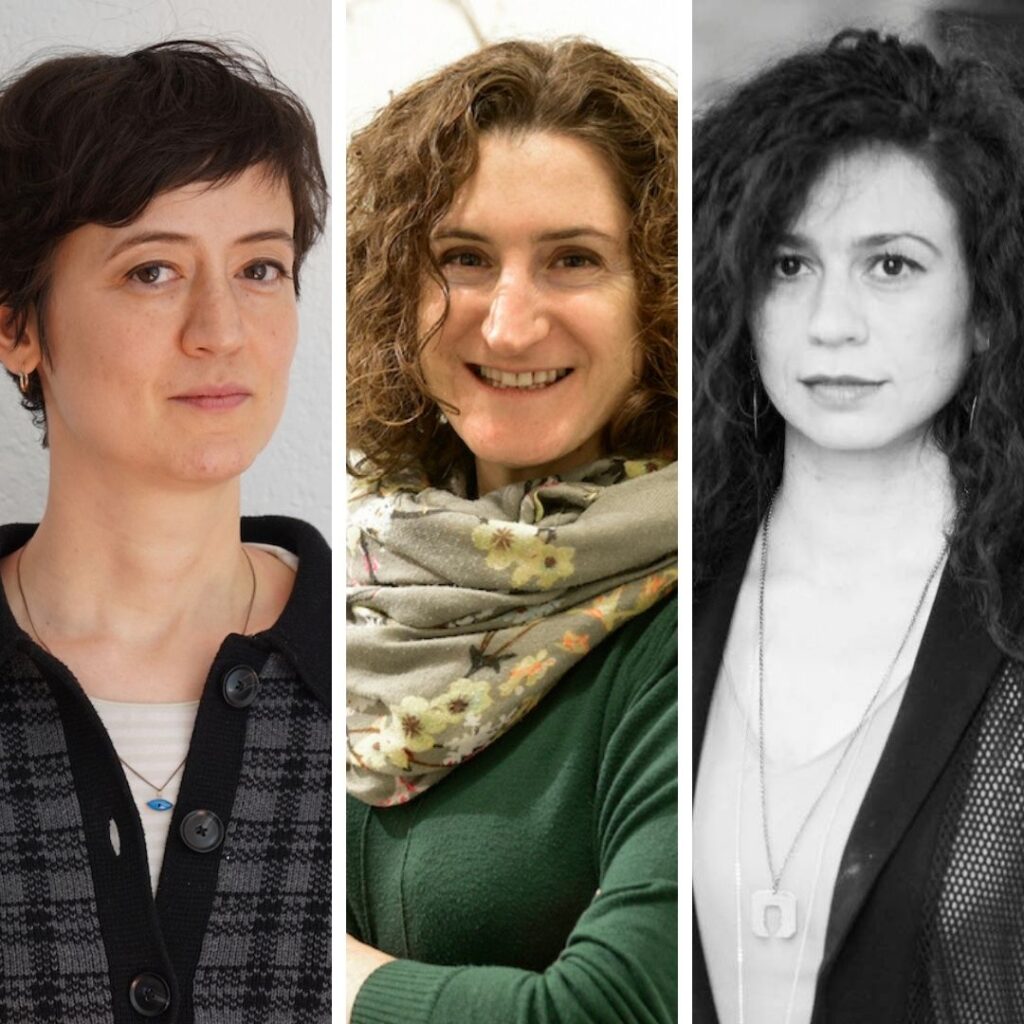
Run in partnership by Kundura Hafıza Archive & Research and Kundura Sahne, the artist program VARDİYA welcomed a new group of artists this year. We asked them about the week they spent at Beykoz Kundura and the ideas and feelings the Kundura Hafıza archive left them with.

Sena Başöz: “I explored the paths of continuity and the possibilities of revival”
How was this week for you?
It was both intense and relaxing. On the one hand, I concentrated on and worked with ruins, which are one strand of my artistic research; on the other, the calm that came from being a little removed from everything gave me rest.
Had you taken part in a program like this before?
I have previously taken part in various artist residency programs abroad. The structure of each residency and the resources it offers are unique and very different from one another. So I can’t compare Beykoz Kundura with the others.
How did you feel when it ended? What had you gathered, both in your hands and within yourself?
From the moment I began staying at Beykoz Kundura, an analogy with an ancient city was always on my mind. After all, I grew up in Denizli, among the ruins of two ancient cities. Probably because of this early experience, ruins are one of the important sources of my artistic practice.
In my practice, while researching healing, I look for ways to interact with the unreachable and to experimentally revive what is considered frozen, dead, expired or lost.
“Frozen, dead, expired and lost” practically describes ruins. So how can ruins be revived? That is what I think about. In my research at Beykoz Kundura, I approached ruins as the story’s resistance to time and disappearance. I explored the paths of continuity and the possibilities of revival.
Did this process open up new possibilities, forms or potentials in your practice?
In many ways, the process sparked my imagination and fed my ongoing research on ruins. I observed the possibilities of revival amid the ruins under several headings. I approached the relationship between movement and revival under two headings: the movement of light, and movement tied to the continuity of rituals. I thought that the emptiness and silence of the vast spaces, by opening room for possibilities of revival, nourish the intertwined relationship between fiction and truth at Beykoz Kundra. This intertwining is something very particular to Beykoz Kundura.
These observations of mine could, of course, open up to many creative possibilities.

Sibel Horada: “I lived in imaginary spaces”
How was this week for you?
For a week at Beykoz Kundura, cut off from the world, I lived in imaginary spaces made up of old factory buildings and film sets. Even when I went outside, I kept searching for clues to the past of these spaces. Concentrating on a place this intensely is a method of artistic research that I love and often turn to.
Had you taken part in a program like this before?
I have taken part in artist residency programs before, and I drew inspiration from the spaces and collections of the institutions that invited me. Kundura Hafıza’s invitation was very interesting to me because it related directly to its archive.
How did you feel when it ended? What had you gathered, both in your hands and within yourself?
What drew me most during that week were the oral history recordings of the workers and civil servants who once worked here. Through the imaginary closeness I formed with these people, I gained insights into the social policies of the Republic’s history, gender, cinema and Fordism.
Did this process open up new possibilities, forms or potentials in your practice?
This process has surely created new possibilities, but I don’t yet know exactly what they are myself.

Sinem Dişli: “For me, Beykoz Kundura was like a school or a campus”
How was this week for you?
I can say that my week in Beykoz was wonderful. The venue being close to central Istanbul, and being able to be in the midst of nature and in such close contact with the sea, was an incredible experience. I was able to observe Istanbul in a completely different way. Being able to feel safe there as a woman, and to be outside freely very early in the morning or very late at night, was an important opportunity. The room I stayed in at the guesthouse was also very comfortable, which made my experience even better. Everything has been thought through in the Beykoz Kundura artist residency program, and a very good environment has been created where artists can focus on themselves.
The Beykoz Kundura Factory is a historic piece of industrial heritage and an important venue for cultural events. The buildings’ relationship with the stream and with water, the memory of spaces whose locations were determined by how suitable conditions were for leather and paper production and their connection to the past, reading its history as an inhabited place, entering its archive and imagining what happened there all gave me a new perspective.
Keeping an archive of my own, I collected objects washed up by the sea and mosaic fragments left over from the factory. It was lovely to look at the trees there, specimens that reflect Istanbul’s vegetation, and to feel the surroundings enveloping you. Being able to spend a week on my own, while also being in the city and having a solitary, comfortable time, was very precious to me.
In particular, watching the videos and experiences of the factory workers in the archive and being able to use a computer set aside especially for us were great opportunities.
Had you taken part in a program like this before?
Yes, I have taken part in many artist residency programs in many parts of the world. But Beykoz offered a unique experience.
How did you feel when it ended? What had you gathered, both in your hands and within yourself?
Honestly, I didn’t want it to end at all; it was a bit short for me. There truly is an ocean of an archive, and the most incredible and transformative part was listening to so many proud stories. It was interesting that people working in the many branches into which labor at the factory was divided felt happiness and excitement in doing the same thing all day and experienced it as something liberating.
I was moved by the fact that activities for children were planned there, that people went to the cinema at night, and that life was lived so intensely. It was quite interesting how, in this social environment of the Beykoz Kundura Factory, people spent time with one another tirelessly and how the factory made such an experience possible.
I can say that I mostly did shooting and gathering. I collected various objects and I plan to create a work related to them. During this time, I wanted to work in all the buildings for days, even months, to read and discover more.
Did this process open up new possibilities, forms or potentials in your practice?
Yes, I can say that it absolutely did. I think about how we construct history, and how the experiences lived in the moment are usually excluded from historiography. That is why the experience I gained in the archive here, alongside my work in both archaeology and geology, was very valuable to me. While I usually look at a much more distant past, here I had the chance to reflect on the more recent past.
I thought in particular about the materials used in the factory, and about how we relate the influence of our bodies and of the place we are in, of water, soil and climate, to the processing and use of materials. In this sense, Beykoz Kundura was like a school or a campus for me. It opened a large window both for thinking about materials and for considering rhythm, daily life and the conditions of production in the age of the climate crisis.
It was also interesting to photograph the site and observe how it is used today. This experience has definitely influenced my practice and created new possibilities. Thank you so much for this invitation.

VARDİYA: Inspired by the workers’ shift system
Born from the combination of Kundura Sahne‘s experimental, innovative and research-driven approach to performance practice and Kundura Hafıza‘s approach of pursuing local wisdom and preserving what has been lost, the artist program Vardiya began in 2022. Having hosted artists and collectives such as Gözde İlkin, Alican Tezer, Canan Yücel Pekiçten and Çıplak Ayaklar Kumpanyası to date, the program aims to create new spaces for thinking and encounter where art and the archive meet.
Created with inspiration from the dictionary meaning of the word ‘vardiya’ (shift), which entered Turkish from the Venetian ‘vàrdia’ and the Italian ‘guardia’, and from the Italian verb ‘guardare’, meaning ‘to protect, to watch over, to keep watch’, the program was conceived with inspiration from the shift work system at the Sümerbank Deri ve Kundura Fabrikası, where workers handed over their watch to one another. For one week, the artists spend time in the archive of Kundura Hafıza and generate original ideas by developing, through their own practices, the research-based work they have taken over from the previous artist. When they leave at the end of the week, they hand over what they have gathered to the artist who will take the next shift.
The artists of Vardiya 2023 and 2024 come together on the same stage on June 1. The talk, in which the experiences of the Vardiya process will be shared, will be moderated by Merve Akar Akgün, Editor-in-Chief of Art Unlimited, with the team of the modern dance company Çıplak Ayaklar Kumpanyası from Vardiya 2023, and visual artist and director Sena Başöz, contemporary artist and curator Sibel Horada and photographer Sinem Dişli from Vardiya 2024 joining as speakers. The talk is also open to the public; to make a reservation, please click this link.