03 July 2026
A review of Vampyr, the production by Chilean writer and director Manuela Infante that recently had its first performances in Istanbul, in which she questions the boundaries between nature and culture, the human and the non-human.
Staged by Chilean director and writer Manuela Infante, Vampyr brings the director and Beykoz Kundura together on stage once again, following How to Turn to Stone, which made a big impression in 2022. While deconstructing the notion of vampirism, the play examines the impact that corporations have on symbiotic life under the guise of “sustainable energy.” Staged at Beykoz Kundura on June 27-28, Vampyr becomes a mockumentary (a fake documentary) that focuses on non-human beings to examine how exhaustion within the capitalist system has evolved into a frenzy of production.
The Camouflage of Capitalism and Ecological Exploitation
Unfolding through two vampire characters, the production puts under the microscope the destructive effects of ecological problems and of the capitalist mode of production on humans, non-human living beings and nature. Blending the mockumentary format with elements of black humor, Infante shows how renewable energy policies lead to the mass killing of living creatures, while also emphasizing that, within the capitalist order, the concept of “sustainability” is in fact used as an apparatus that camouflages exploitation through relentless production and efficiency.
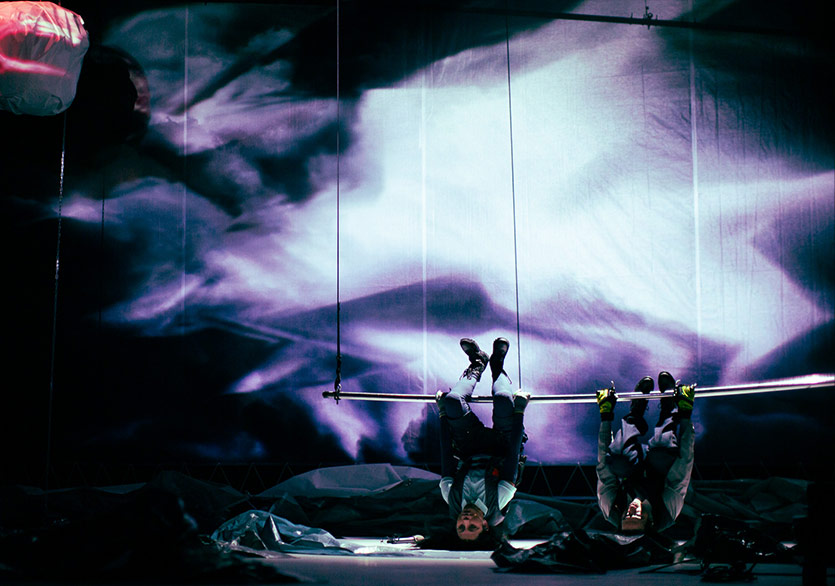
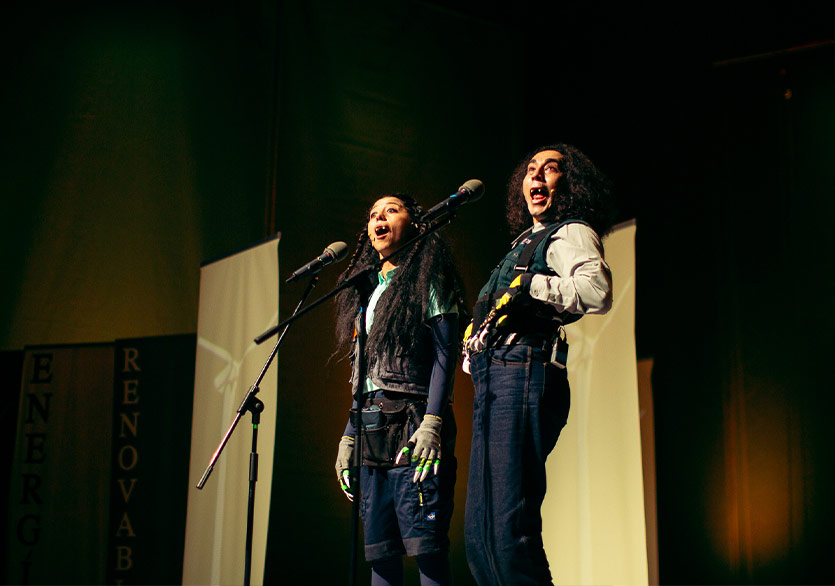
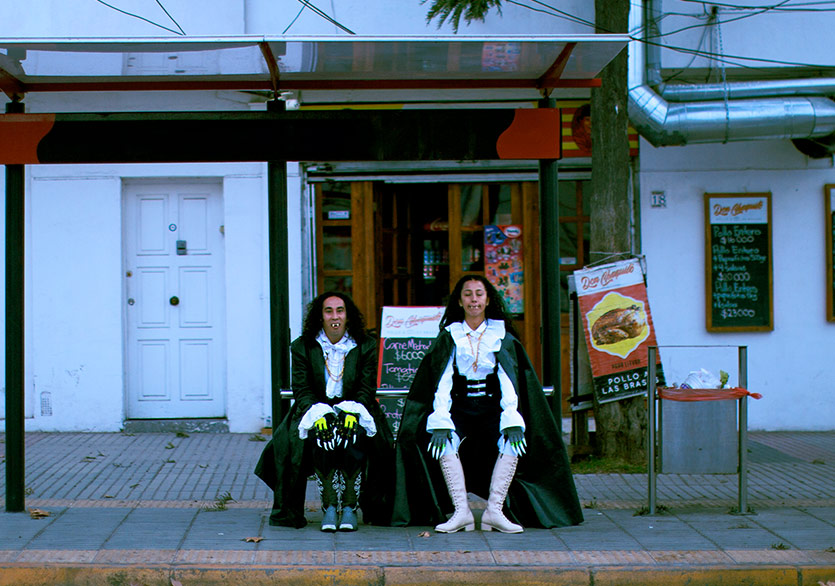
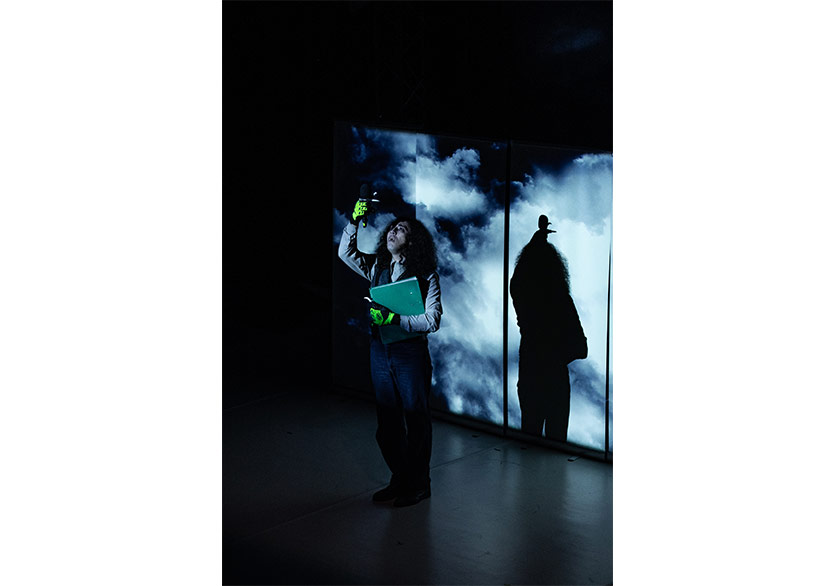
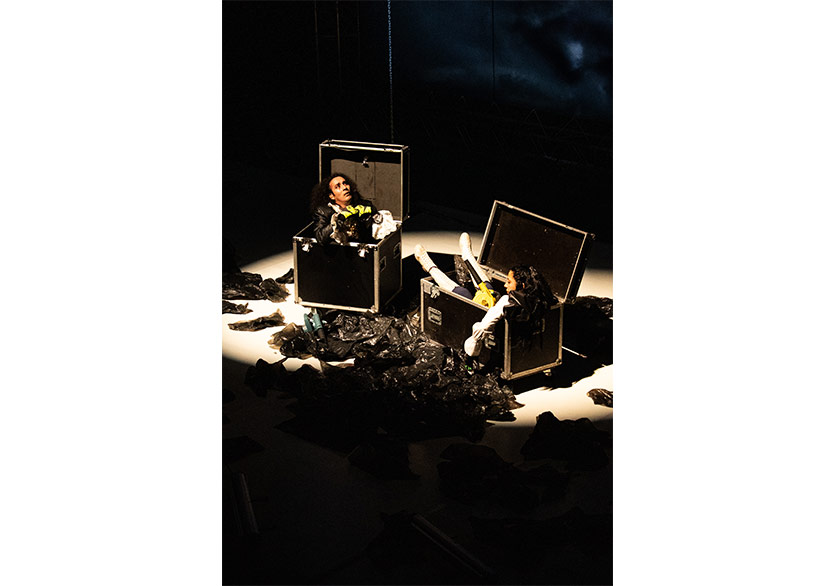
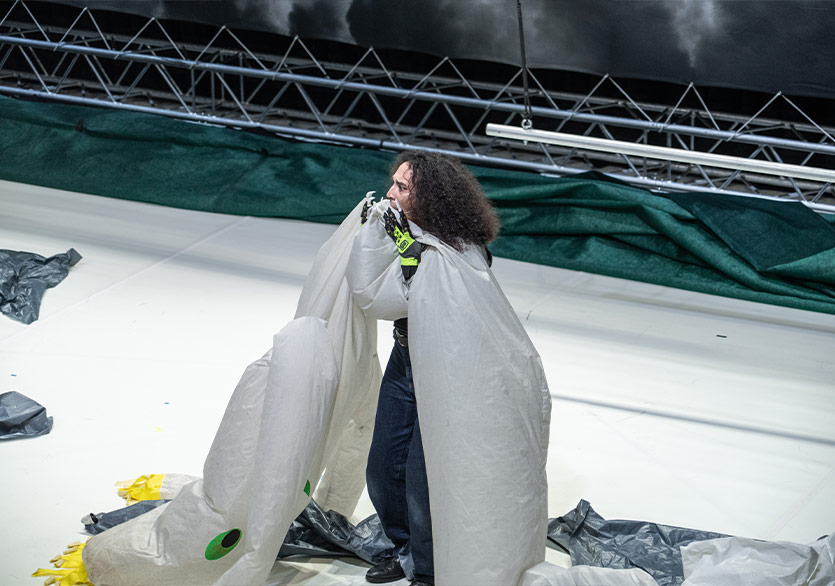
In an interview with Milliyet newspaper, Infante explains that rather than drawing on the aristocratic Western representation of the vampire, she shaped her characters around the idea of the “vampiro sudaka,” a being that exists neither within life nor within death, in which two opposite poles do not exclude one another. Marcela Salinas and David Gaete, who bring to life the vampires that drive the play, skillfully convey this state of limbo on stage, drawing on the resources of physical theater. The performers move seamlessly between the incomprehensible language of the non-human and the figures who accompany the narrative and are crushed in the gears of capitalism. Nor do they stop there: they merge with the objects on stage and, in keeping with the philosophy of post-anthropocentric theater, effortlessly turn the set pieces into “supporting actors” as well.
The Illusion of Sustainability and Exhaustion
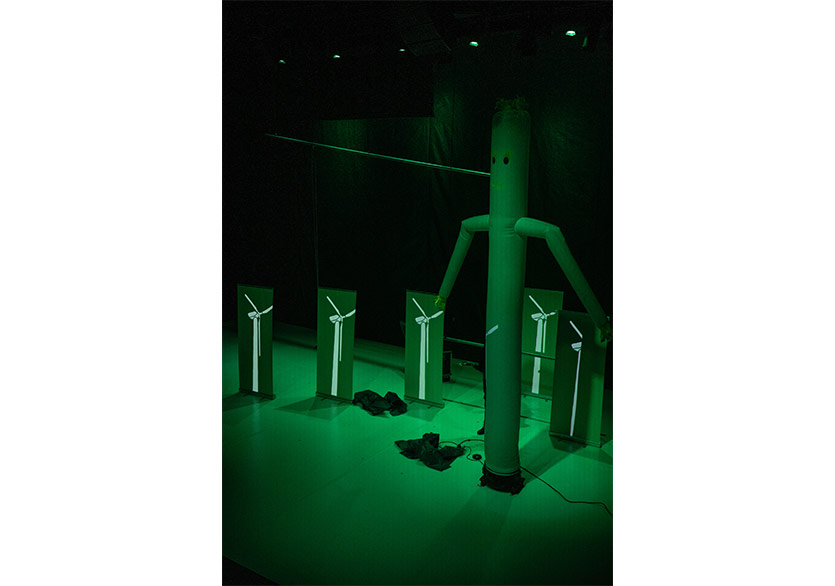
As I mentioned above, the play levels a very harsh critique at the concept of “sustainability.” The vampires satirize the figures leading these sustainability policies by taking on their guise. Making heavy use of wind farms and “green” slogans, the production depicts how these policies in fact do great harm to the people living in the surrounding area and to the other living beings of the region. Treating sustainability, in a sarcastic and hard-hitting language, as essentially a new cover for “sustaining” the capitalist system and profit maximization, the play lets us witness how the characters are crushed in the gears of things like health policy and employment, and turned, as it were, into “the living dead.”
It is precisely at this point that the play’s state of “immortality” points to an endless workday, to an existential exhaustion (burnout) that exceeds the limits of the body, and to the tragedy of the contemporary human being who is forced to be productive at every moment. The vampire is no longer a gothic monster that hunts by night; it becomes a metaphor for a system that goes on consuming nature and people with the promise of green energy.
The Fatigue of Form: Problems with Pacing
Despite its substantial subtext and a dramaturgy designed to push the audience out of its comfort zone, the play cannot escape falling victim to its own pacing. Considering that this one-act play runs for about 100 minutes, the production starts to repeat itself once it has stated its central proposition. As it gradually begins to drag on, it inevitably risks becoming a tiring viewing experience. Twenty minutes could easily be cut from the play, or its scenes tightened, allowing it to make its point far more clearly.
For although the play shows that the exhaustion and the sustainability it criticizes in fact push individuals within the capitalist order to work, to destroy and to be destroyed to the point of turning them into “the living dead,” after a certain point it begins to exhaust the audience itself. Even so, Vampyr, in an otherwise lackluster theater season, earns a lasting place in the mind as one of the solid examples of post-anthropocentric theater, prompting audiences to question the themes of sustainability, exhaustion, ecology and exploitation.
*This article was first published in Artfulliving.
Author: Enes Altınok
Photos: Franco Barrios, Canberk Ulusan