14 November 2025
Sümerbank
Sümerbank is one of the concrete embodiments of the development plans and the statist economic policy adopted in the early years of the Republic. The institution not only developed the technical infrastructure and skilled workforce that were lacking after the war, but was also designed as a structure that supported private enterprise. Established in different regions of Anatolia across many sectors, from iron and steel to weaving and from ready-to-wear clothing to a variety of consumer goods, Sümerbank facilities made basic necessities accessible to broad segments of the population. These facilities also brought new opportunities for economic activity and social life to the towns and cities where they were located.
The Sümerbank Beykoz Deri ve Kundura Fabrikası (Beykoz Leather and Shoe Factory), which witnessed the process of industrialization stretching from the Ottoman Empire to the Republic, is one of the most distinctive examples of this story. Reorganized under the Sümerbank umbrella during the Republican era, the factory became more than just a site of production, evolving into a center of life with its hospital, daycare, cinema and various social facilities. In this respect, Beykoz Kundura offers a unique, holistic model among the early industrial complexes of Türkiye.
Domestic Goods Are the Nation’s Goods
In 1929, centered on the rhetoric of “national savings,” the National Economy and Savings Society was founded to promote the use of domestic goods and strengthen a culture of thrift. Through Domestic Goods and Savings Week, conferences, and exhibitions held in Türkiye and abroad, the Society strove to make domestic production visible.
With the founding of Sümerbank, this mission moved directly into the realm of production. The public was called upon through slogan-bearing posters and advertising campaigns produced in the 1930s and 1940s. The new national identity that the Republic sought to build aimed to transform production, culture and daily life simultaneously, combining a “national and domestic” line in the economy with an “international” one in its approach to technology and design.
To manage the sale and distribution of its products more systematically, Sümerbank established the Sümerbank Directorate of Domestic Goods Markets in 1934. The main aim of this initiative was to bring Sümerbank products directly to consumers and to keep a close eye on the market. During the Second World War, the role of the Domestic Goods Market became even more critical: as the sale of many basic consumer goods was brought under control, delivering textiles and clothing to the public at “normal” prices became one of the institution’s chief duties.
Following the closure of the Domestic Goods Market, the Sümerbank Trading Establishment was founded in 1949. Starting out with only 3 stores, the organization grew to 180 stores by 1969 and to 500 by 1978, when the privatization process began, becoming an extensive distribution network across Türkiye.
The Kundura Hafıza Archive and Research Center recently opened to the public its collection focusing on Sümerbank and the industrialization and industry of the Early Republican Period. You can explore the collection of photographs, documents and objects related to domestic goods and Sümerbank on its website. For digital archive and library research, you can request an appointment from the Kundura Hafıza Archive and Research Center through its website and visit on weekdays between 10:00 and 17:00.
Click to explore the Kundura Hafıza Archive Catalog.
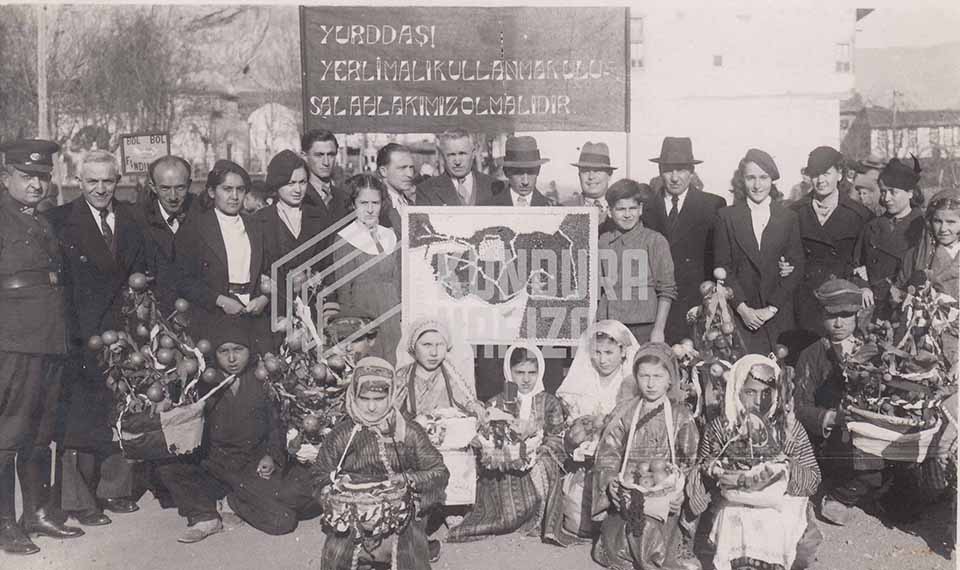
A Domestic Goods Event
Kundura Hafıza Archive and Research Collection
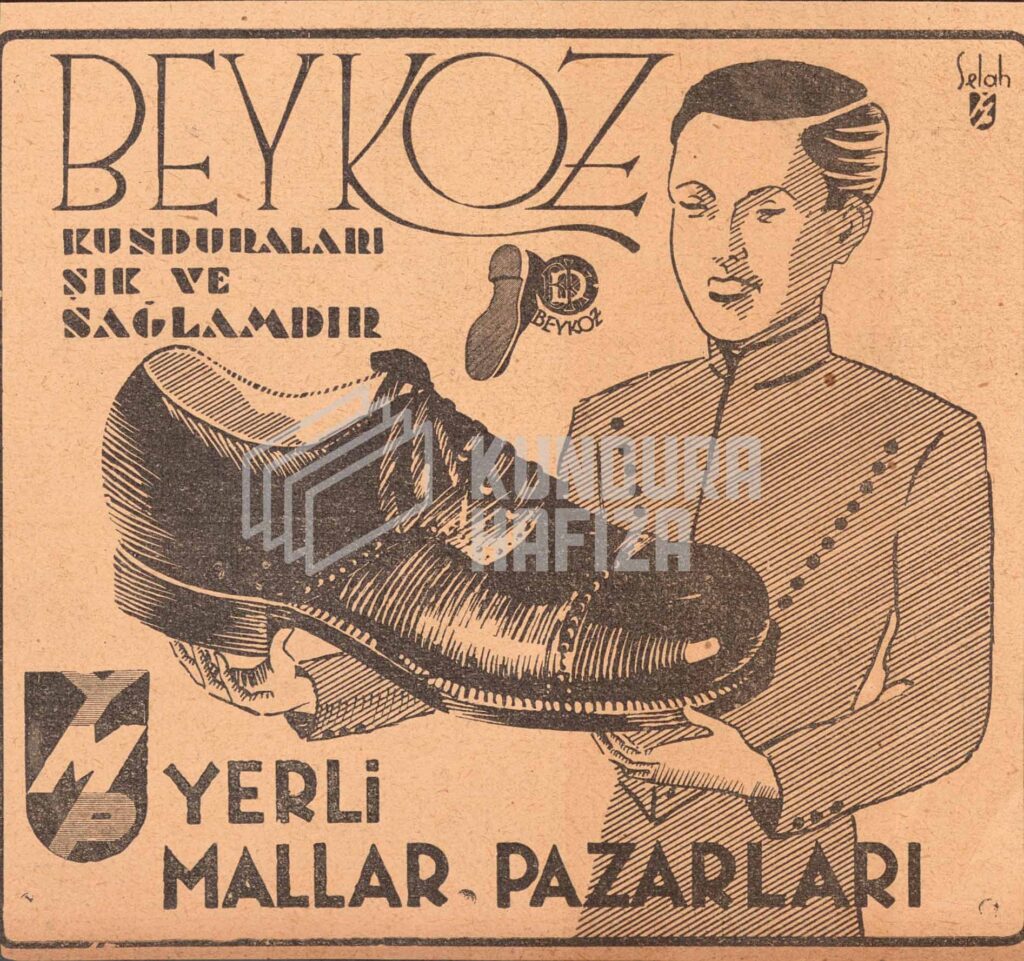
Sümerbank Beykoz Deri ve Kundura Fabrikası Domestic Goods Advertisement
Kundura Hafıza Archive and Research Collection
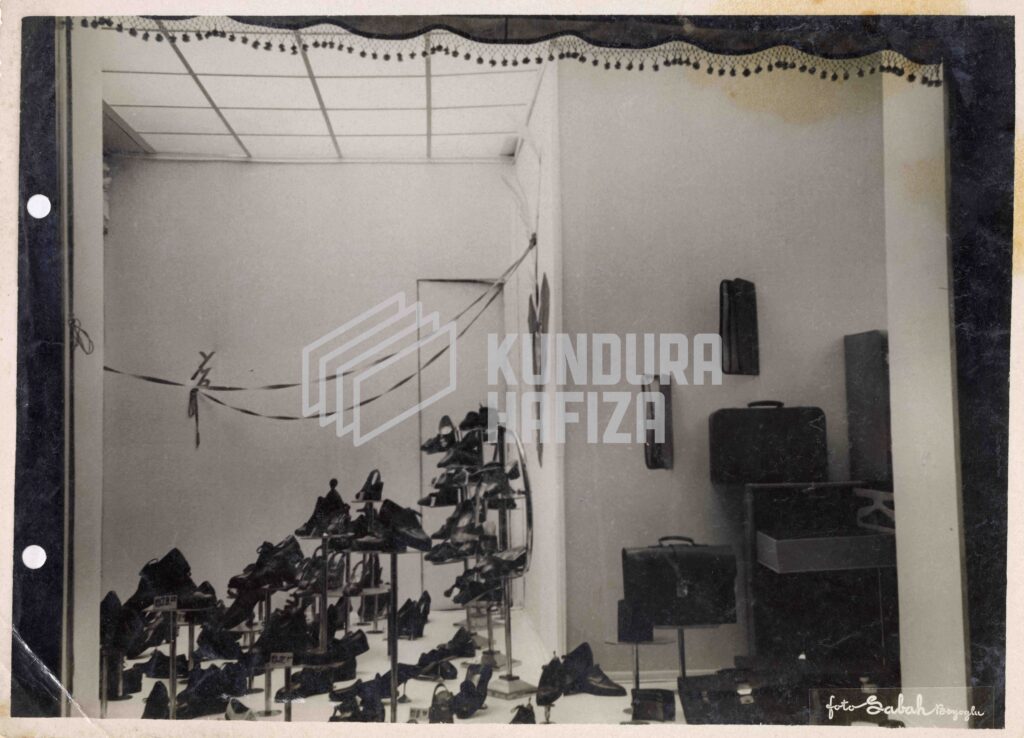
Sümerbank Beykoz Deri ve Kundura Fabrikası Products in a Sümerbank Store Window
Kundura Hafıza Archive and Research Collection
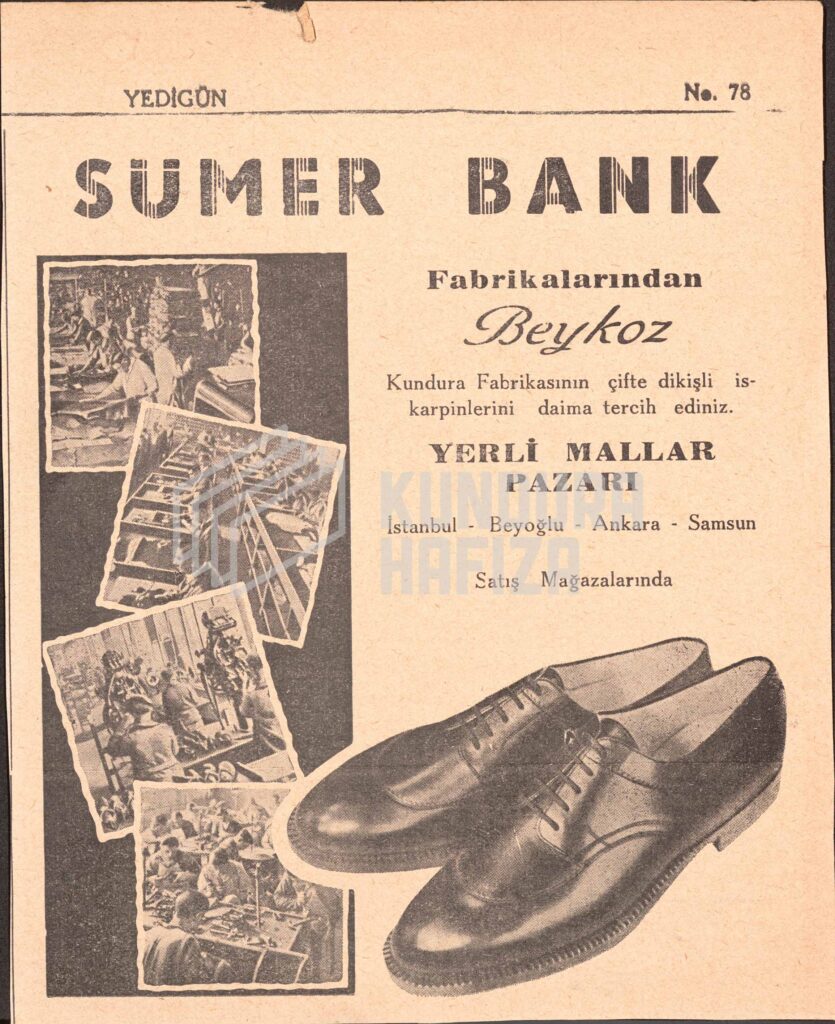
Sümerbank Beykoz Deri ve Kundura Fabrikası Domestic Goods Advertisement
Kundura Hafıza Archive and Research Collection
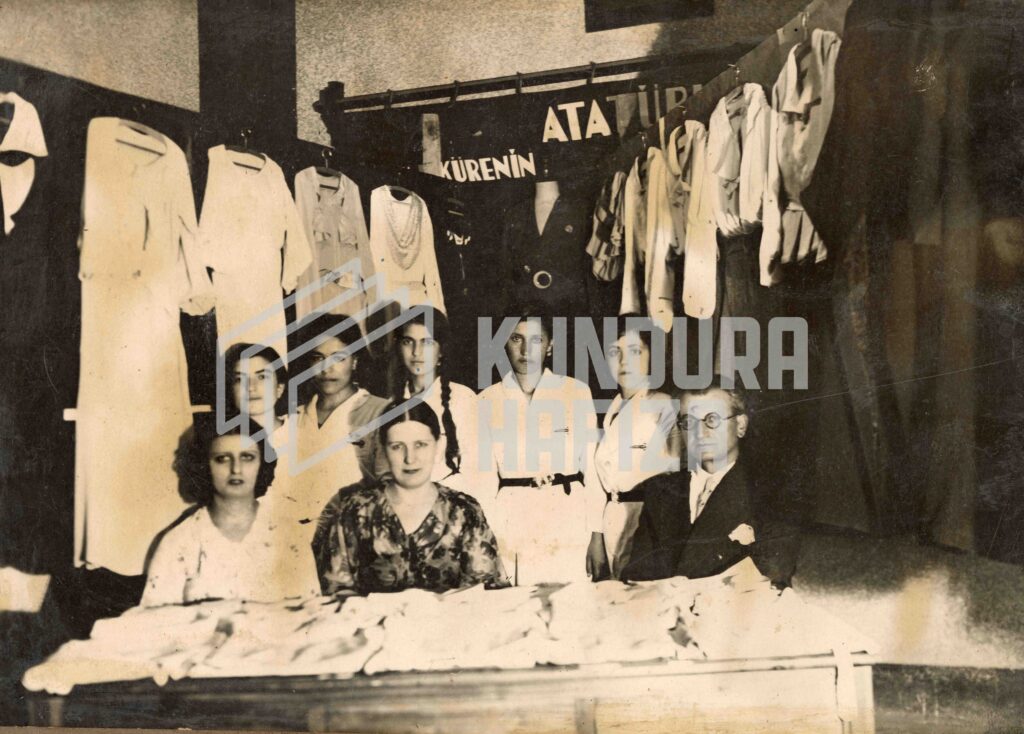
A Domestic Goods Clothing Stall
Kundura Hafıza Archive and Research Collection
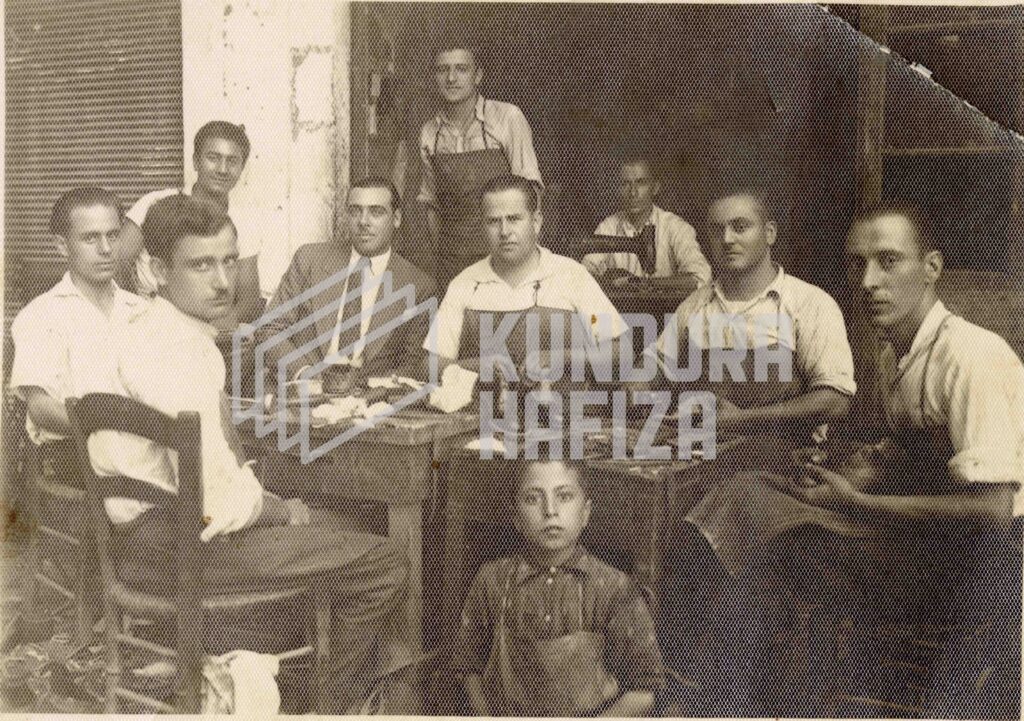
A Shoe Production Workshop
Nurtaç Buluç
Archive and Research Coordinator