11 October 2022
Kundura Sahne’s production with one of Europe’s leading art collectives, Rimini Protokoll, sold out amid enormous audience interest. The Istanbul adaptation of “Remote X,” which has been staged in more than 50 cities from London to Taipei and from New York to Buenos Aires, the performance Remote İstanbul created a unique experience for its participants.
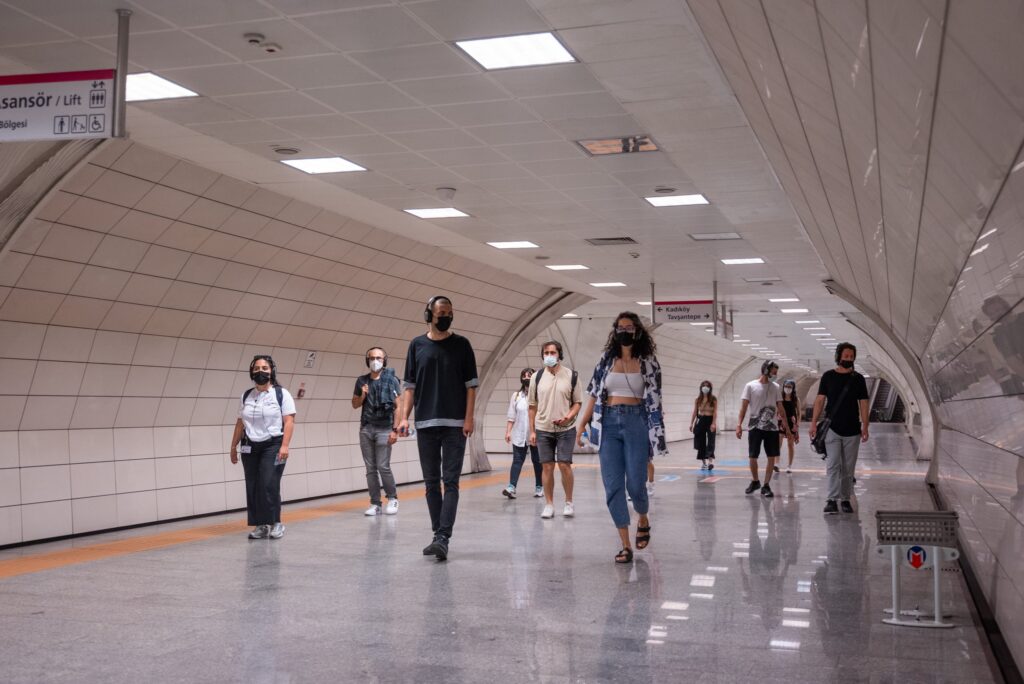
Accompanied and guided by an artificial intelligence named İpek, the play takes participants on a surprising tour through the streets of Kadıköy. While encouraging us to observe our individual decisions and behaviors alongside artificial intelligence, it points to the details we miss in the daily rush and invites us to look at our bond with the city and with life through new eyes, creating “different encounters in the city.”
Bahar ÇUHADAR’s Remote İstanbul experience piece is now on our blog!
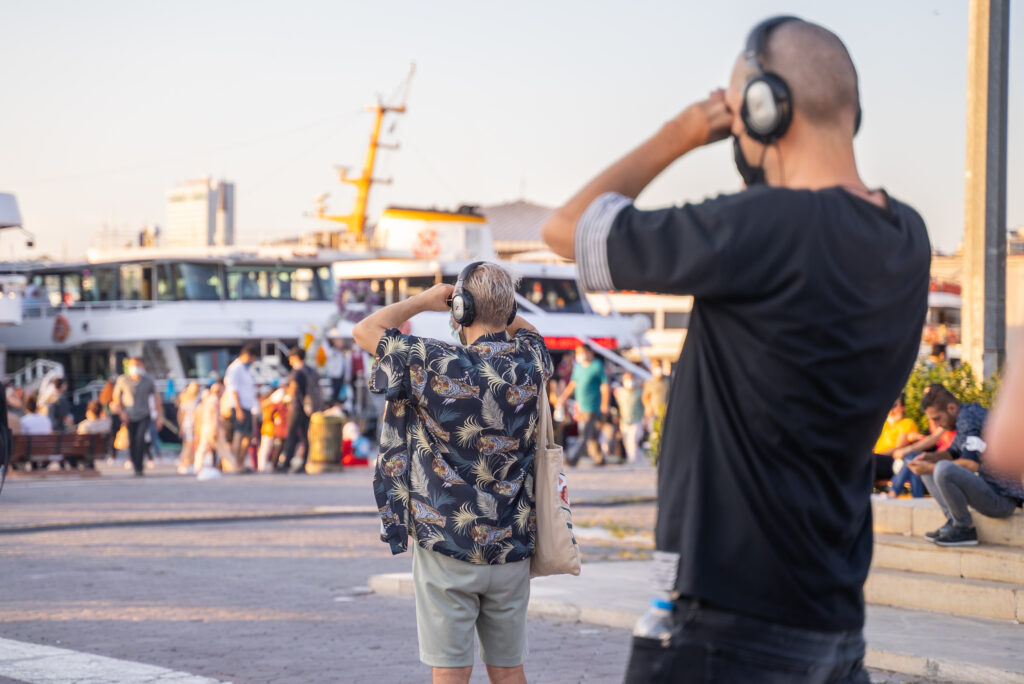
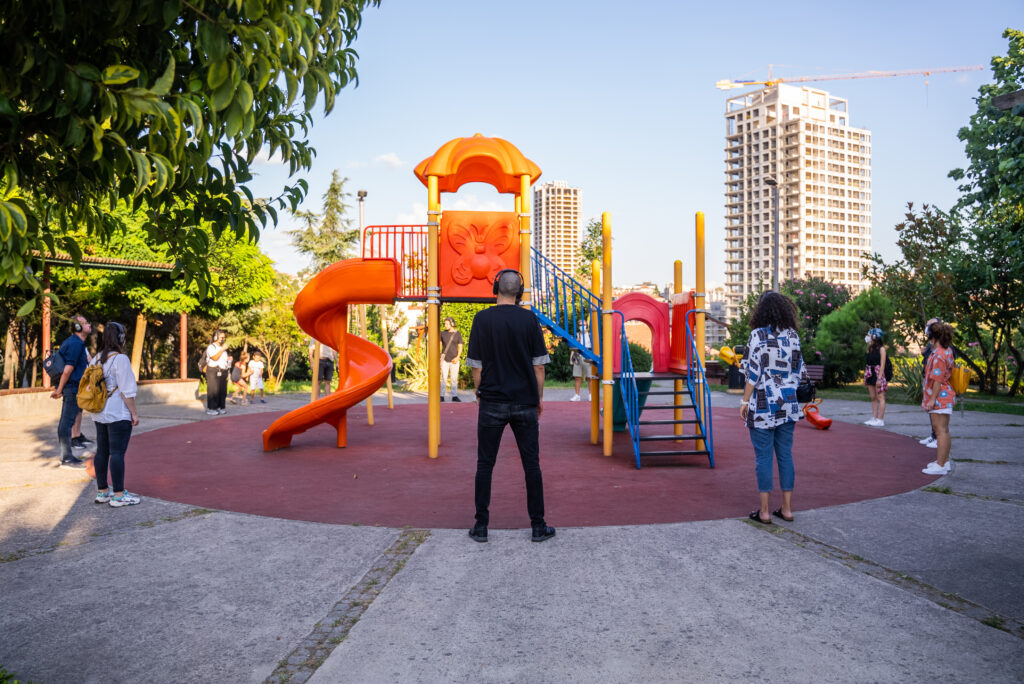
“Remote İstanbul,” the Istanbul leg of the “Remote X” project, which has been adapted for 50 cities from London to Abu Dhabi, offers its participants the chance to make a different kind of contact with the city over a two-hour walk. Guided by an artificial voice coming through your headphones, you are invited, from Koşuyolu to Bahariye, to a kind of mental, physical and emotional exercise you are not used to. Don’t forget to wear your sneakers to the show.
Are you up for a walk through the streets of a city you know well, of a kind you have probably never taken before? This walk follows a set route with specific stops and contains an experience designed for you in advance, but your reactions, the moments you witness and how far you let yourself into the “game” are up to you. So is the kind of emotional/physical communication you strike up with the city… As a result, what awaits each participant is a one-of-a-kind experience.
“Remote İstanbul,” the Istanbul leg of “Remote X,” a project the German documentary theater collective Rimini Protokoll has adapted for a total of 50 cities from London to Abu Dhabi, invites participants to just this kind of experience. Beginning with a meeting in a neighborhood park in Koşuyolu, the project offers a kind of group performance: for two hours, guided by an “artificial” voice in the headphones handed out, you walk through the city, stop, ride the metro, run, climb ramps, dance, listen, and look at things near and far.
It is a work that sets out to break the memorized city in your body and mind by bringing you into contact with the city’s fixed and/or moving fabric in ways you don’t in your daily routine.
A call that promises different kinds of encounters with the city, with streets and buildings you may know very well, and with your fellow city dwellers.
Designed and directed by Stefan Kaegi, “Remote X” was adapted for Istanbul by Jörg Karrenbauer in a production made in collaboration with Kundura Sahne, one I had announced earlier and had been planning to attend for some time. Throughout the tour, planned yet by its very nature open to surprises, as I moved through the city guided by the voice in my ear, I focused on two things: What is the voice in my ear (the text written for the play) trying to tell me? And what kind of different communication am I having right now with the city’s “limbs” (especially once we took the metro and I realized we were heading toward the neighborhood where I live)?
When projects like this, which lead participants through a space, fall short in weaving the physical experience together with the narrative, the effect of the play may not go beyond “What an interesting thing we just experienced.” “Remote İstanbul,” which sets out to focus on how artificial intelligence has settled into our lives and on our relationship with the city, certainly gives its participants “interesting moments,” but it also struggles to convey what its central concern really is.
At a certain point, I found myself thinking that the artificial intelligence reaching me through my headphones was confused. From then on, even though I kept listening to what the voice was saying, I turned my attention to the path it opened up for me in terms of my contact with the city.
I kept walking, focusing on the different experience the instructions made possible, because I couldn’t figure out exactly what the speaking voice was inviting me to reflect on. For example, if we were walking while thinking about artificial intelligence and our lives, we could have taken our steps while concentrating on how we are already being steered by AI in the city. The text we heard could have “needled” us mainly on that point.
Instead, what we had in our ears was a text undecided about what it was trying to “provoke” the participant about, and how. Since the voice wasn’t clear, I chose to focus, while following the “instructions,” on feeling how I responded to the city (and its people), and how people responded to me.
Especially during the “instruction” at the metro station, the play managed to stir a powerful feeling in me. Coincidentally encountering, several times, the very human profiles and movements the voice was describing made the sense of “play” all the more vivid. (Like a mother, father and child passing in front of me hand in hand, as if deliberately placed “on stage,” just as the voice was talking about the life cycle and starting a family…)
“Remote İstanbul” is a well-chosen option if you want to experience a play that invites the audience on a guided walk through a route/space. Forming a kind of relationship we have never tried before with the city we are stuck inside in our routines, and beyond that, experiencing the vast possibilities of theater, is valuable. On the other hand, it is just as certain that the play’s artificial intelligence needs to gather its train of thought a little…
*This article was published on Hürriyet.com.
Author: Bahar ÇUHADAR