25 November 2025
Kundura Hafıza was founded in 2021 to bring together, preserve and pass on to future generations the more than two-hundred-year history of the Beykoz Deri ve Kundura Fabrikası (Beykoz Leather and Shoe Factory). Its foundations were laid by the Oral History Project that S. Buse Yıldırım carried out in 2015 in collaboration with the History Foundation (Tarih Vakfı), and today all of Kundura Hafıza’s work focusing on labor and industrial heritage continues under the umbrella of the Kundura Hafıza Cultural Heritage Preservation Association. Having carried out its activities since its founding in a building that served as the union building and garage during the Factory years, Kundura Hafıza moved to its new center on the Beykoz Kundura campus and opened its doors to researchers as of October 2025; with the opening of the center, a library has been added to the work carried out under the headings of archive, exhibition and learning programs. The rest of this article introduces Kundura Hafıza’s new research center and its library collection, which offer access to sources documenting the culture of industry, labor and production from the late Ottoman period to the early years of the Republic.
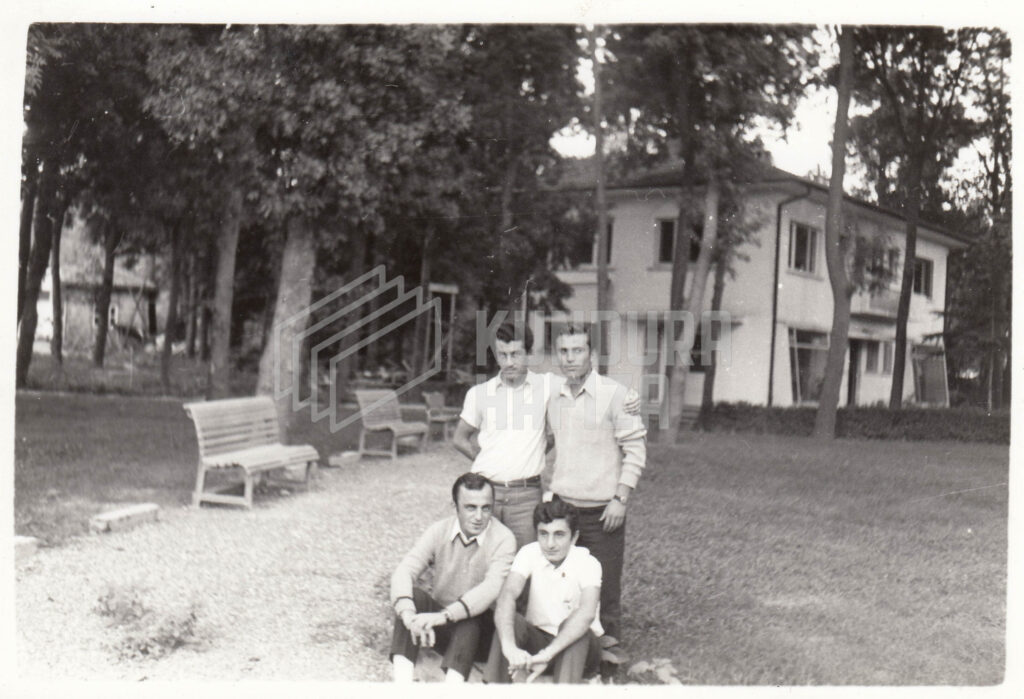
Souvenir Photograph at the Factory, Kundura Hafıza Archive and Research Collection
Donated by: Halil İbrasim Yaşasın
From Daycare Center to Archive and Research Center
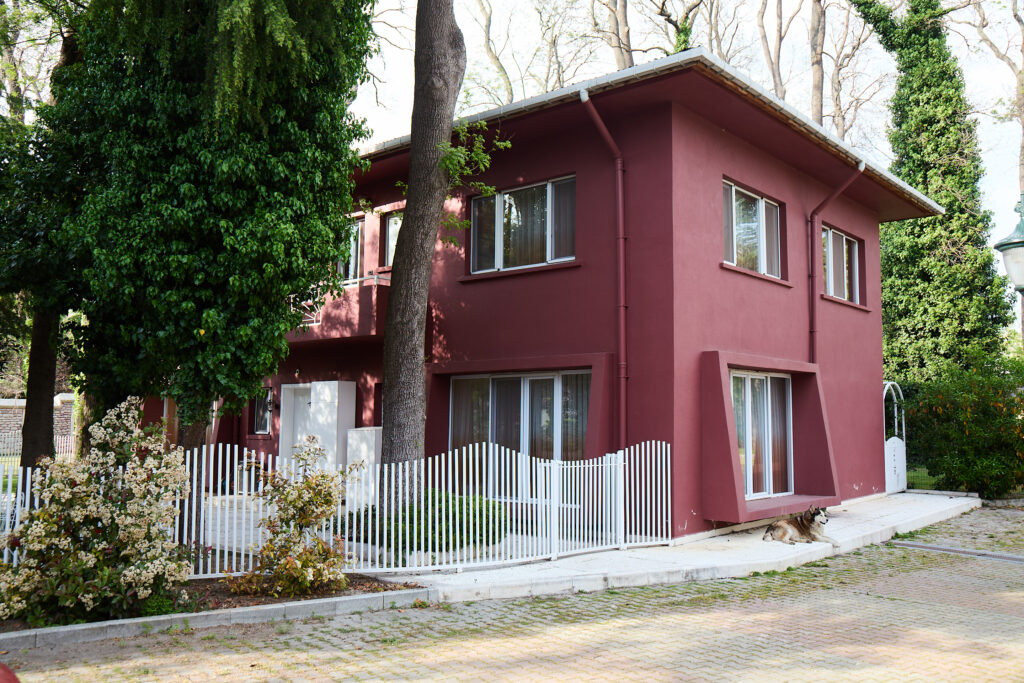
The building that is home to Kundura Hafıza today, repurposed as a research center, was used for a variety of purposes during the factory years, serving as a civil defense building, a planning office, a doctor’s building and a sales store. Dating back to the 1960s, the building last operated, until the factory closed, as a fully fledged daycare center that looked after the children of factory employees, with its own teachers, caregivers and nurses. Daycare centers, which Sümerbank provided at many of its establishments, stand out as an important social benefit that encouraged the employment of women workers. In this respect, the daycare center of the Beykoz Deri ve Kundura Fabrikası also became a factory unit that civil servants and workers remember fondly and that holds an important place in their memories. [1] Registered as a protected building after privatization and put through a careful restoration process, the former daycare building, with its archive, library and study areas, now serves as a public space of knowledge for anyone who wishes to research the memory of Sümerbank and Beykoz Kundura in particular, and the tangible and intangible cultural heritage of Türkiye in general. The upper floor of the two-story building houses the archive storage room holding Kundura Hafıza’s Sümerbank, Etibank and Oral History collections, a digitization room, a darkroom and the Arzu Öztürkmen Collection, discussed later in this article, while the lower floor is home to a library specializing in industrial, economic and labor studies, along with study areas.
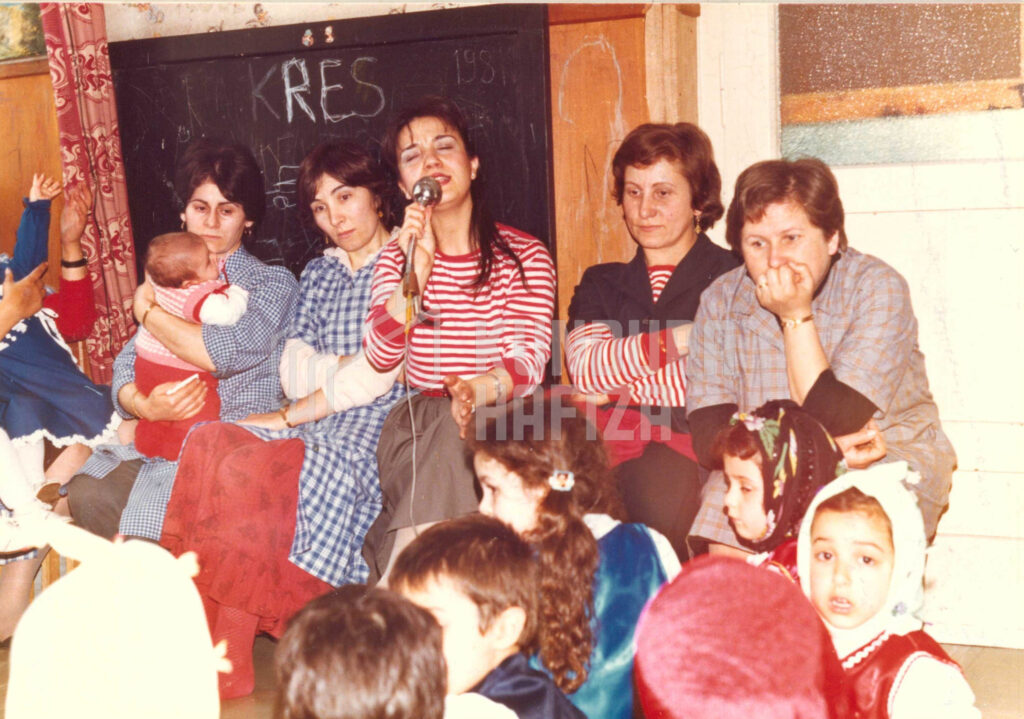
An Event at the Factory Daycare Center, Kundura Hafıza Archive and Research Collection
Donated by: Güner Zeynep Öztürk
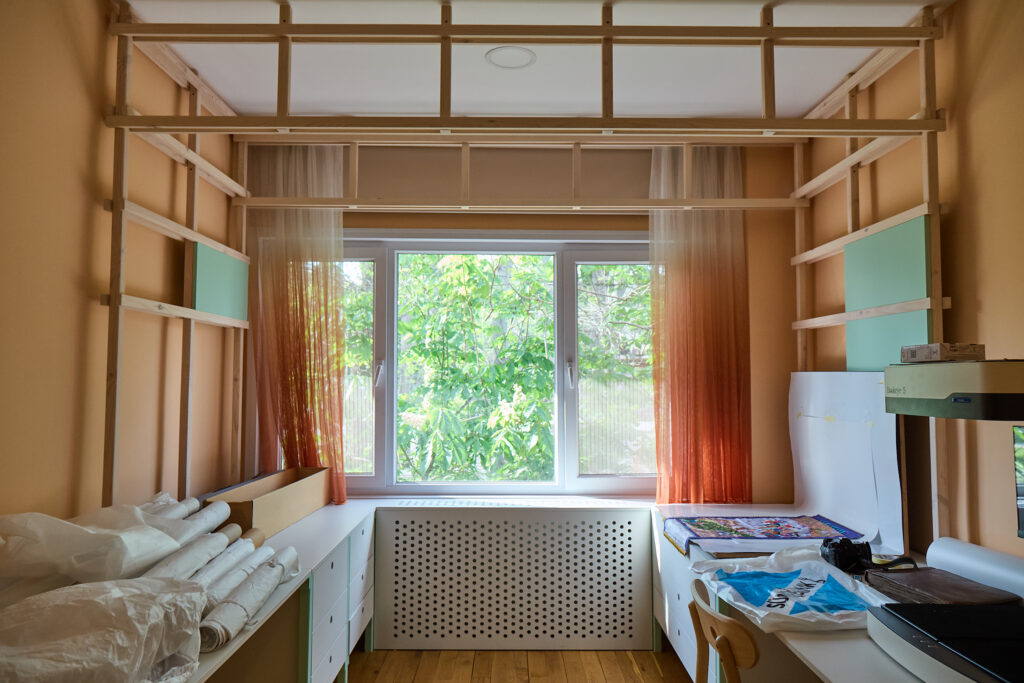
Archive Digitization Room
Photo: Lara Özdoğan Kalari
A Specialized Library for Industrial Heritage
It is known that during the factory years there was a library operating in the management building. It can be said that the library provided an important information service for workers and civil servants, and that it was a technical library consisting mostly of industrial sources on leatherworking and shoemaking as well as on Sümerbank. Oral history interviews also attest that the collection, made up of publications in various languages such as English, French and German in addition to Turkish, [2] was quite comprehensive. For instance, Sıddık Özbek, who, after previously working at Sümerbank’s textile plants, served as director of its factory in Beykoz between 1982 and 1985 [3], describes how, after his appointment, he first turned to the library to learn about leatherworking:
“ (…) The factory had a good library focused on leather. Since I knew German, I would take the German books there and, well, for days, for months.. What is leather, what is a shoe, so that I would at least have a little knowledge about them, that’s where we put our emphasis..” [4]
Moreover, according to the testimony of Aslan Kandemir, who worked for a time as a librarian at the factory, employees’ children could also use the library, whose shelves included the Meydan Larousse encyclopedia. The library, which lent out its books against a signature, was also a regular stop for the families of workers and civil servants living both in the staff housing and in Beykoz.
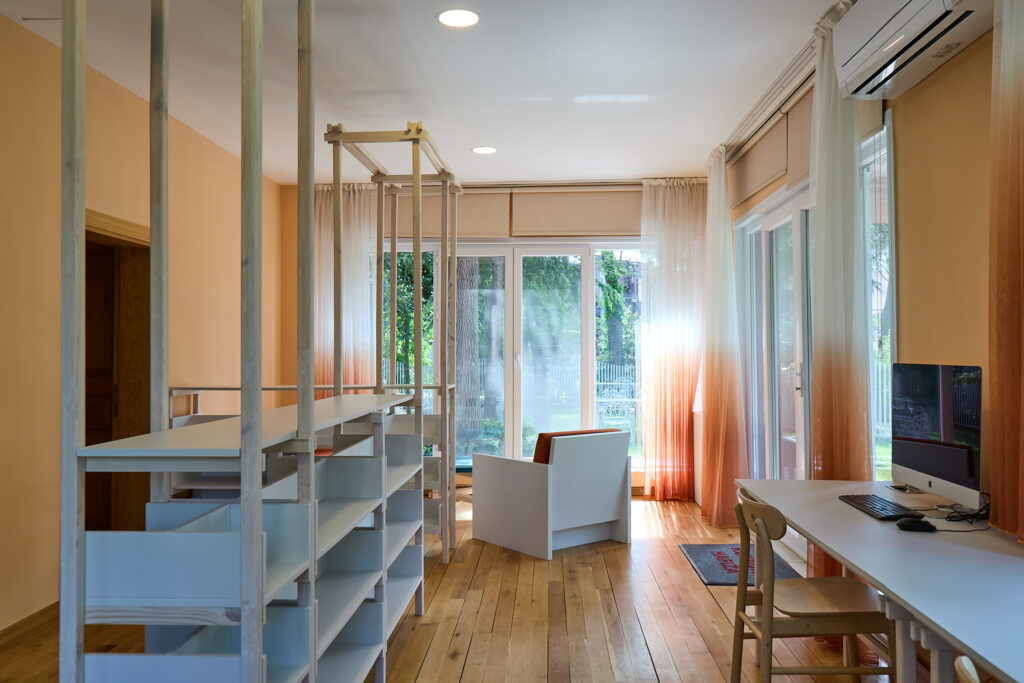
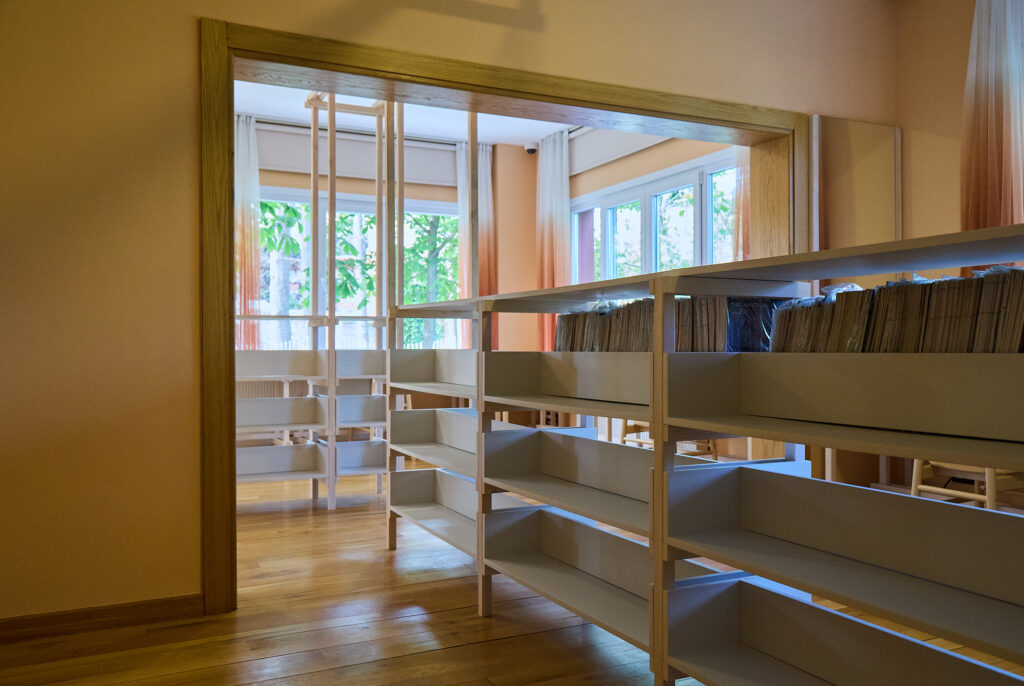
Space Design: Future Anecdotes İstanbul
Photo: Lara Özdoğan Kalari
Inspired by the factory, Kundura Hafıza’s library, the latest pillar of its work, has likewise been conceived as a specialized library. The library brings together sources focusing on the industrial and economic history of the Ottoman and Republican periods, labor studies and industrial heritage. A wide range of sources, from rare works on the history of Sümerbank and the Beykoz Deri ve Kundura Fabrikası to recent books, and from collective labor agreements and operating regulations to financial reports, form the basis of the collection, whose research, development and cataloging work is still ongoing. Guides published by the Sümerbank General Directorate, many of which taught engineers, foremen and workers subjects such as mathematics, electricity, physics and machine operation, together with introductory books on industry translated from languages such as English, German and Russian, reveal the role Sümerbank played in economic and industrial development. Publications examining labor in all its aspects, above all the working class, strikes and trade union movements, as well as institutional history monographs on the past of factories that have operated in our country, also make up a notable part of the collection.
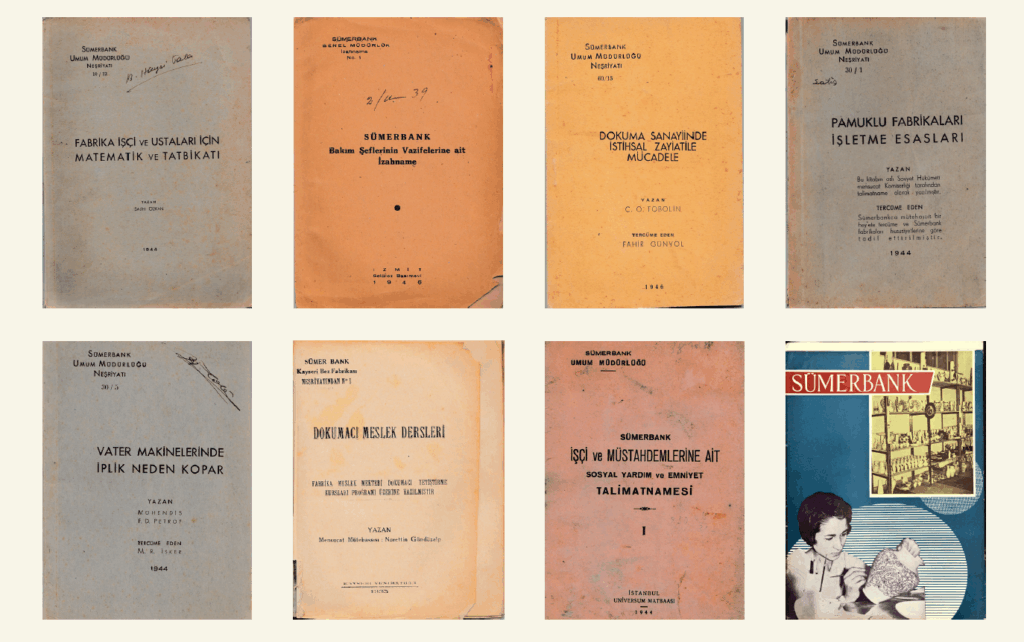
Publications of the Sümerbank General Directorate and Sümerbank Magazine
One of the library’s core missions is to bring together sources covering all the fields of study on which Kundura Hafıza focuses, thereby making an integral contribution to the institution’s research and production activities. In this respect, the shelves also offer access to publications focusing on memory, cultural heritage, conservation, archives and museum studies. Among these publications, biographical works containing personal testimonies and professional experience related to the history of the factory and of Sümerbank hold an important place. For example, Sultanhisarlı Ali Zühtü Bey’in II. Meşrutiyet ve I. Dünya Savaşı Anıları (The Second Constitutional Era and World War I Memoirs of Ali Zühtü Bey of Sultanhisar), compiled from the memoirs of Ali Zühtü Bey, who did his military service at the Beykoz Factory during the Ottoman period, gives us valuable information on production, management and working conditions in a period when the factory had not yet come under civilian administration and most of its workforce consisted of soldiers. Aziz Alpagut, an Azerbaijani doctor, is one of the witnesses of the factory’s early Republican period. After Azerbaijan was annexed by the Soviets, Alpagut went abroad; having trained in leatherworking in Frankfurt, he worked briefly in Beykoz in the mid-1920s but left his post because he found the conditions unsuitable. Alpagut’s memoir Hayatımın Hikâyeleri (Stories of My Life) and his technical work Tatbiki Dericilik (Applied Leatherworking) can be consulted in the collection today. In this context, the accounts of figures such as Ali Zühtü Bey, Aziz Alpagut, Adnan Erkmenol, one of Türkiye’s first industrial engineers, and Gözen Küçükerman, who designed the interiors of the Sümerbank stores, offer researchers a different perspective by providing, much like oral history interviews, information about the history of Sümerbank and Beykoz Kundura that does not appear in official sources, while also forming an important part of the growing library collection.
In addition to publications taken over from institutional archives such as those of Etibank and Sümerbank, the collection has also been enriched by personal donations. Within this framework, the personal library of Prof. Dr. Arzu Öztürkmen of the Boğaziçi University Department of History, one of the most important scholars in the field of oral history in our country, has been added to the collection; focused on oral history, folklore and performance studies, it also includes all of her academic output. One of Öztürkmen’s research areas is television studies and the TV series industry. Also holding various sample scripts, posters, trade fair catalogs and periodicals from productions on the rise in the global market, the collection is a particularly valuable resource for television studies. In this respect, it also plays a complementary role by including publications related to one of the functions of Beykoz Kundura, which serves as a film studio and is one of the most important places where the culture industry produces its work. Unlike the general collection, the Arzu Öztürkmen Collection, which is kept on the archive floor of the center and whose cataloging is still ongoing, will be available to researchers on request through a closed-stack system.
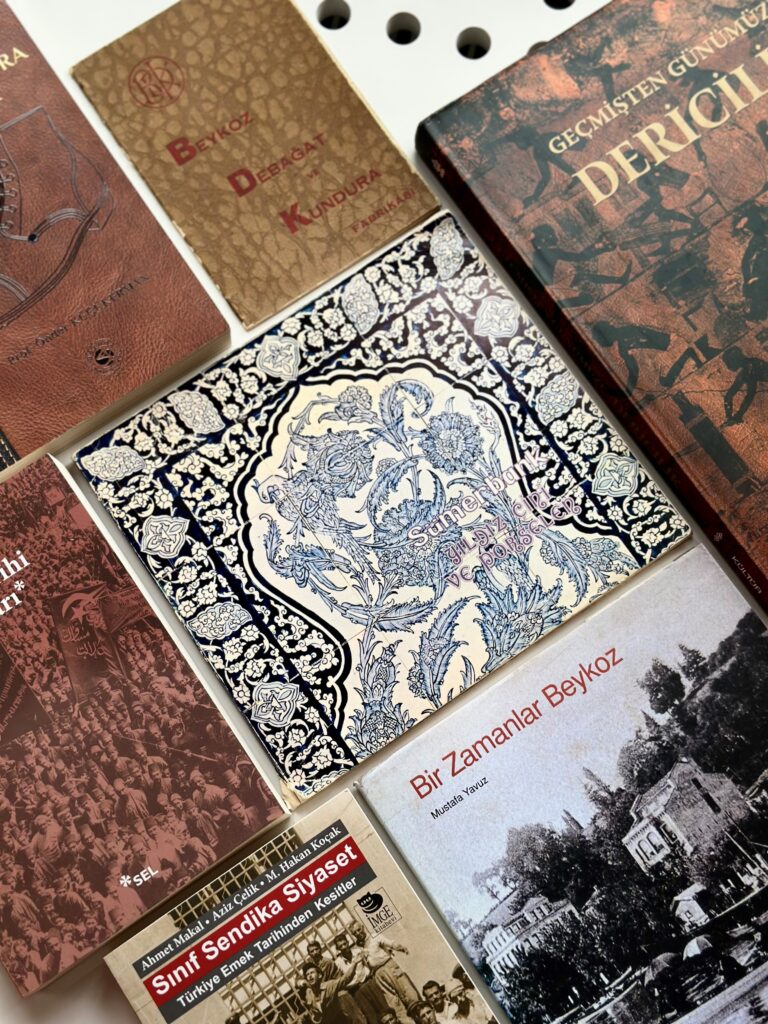
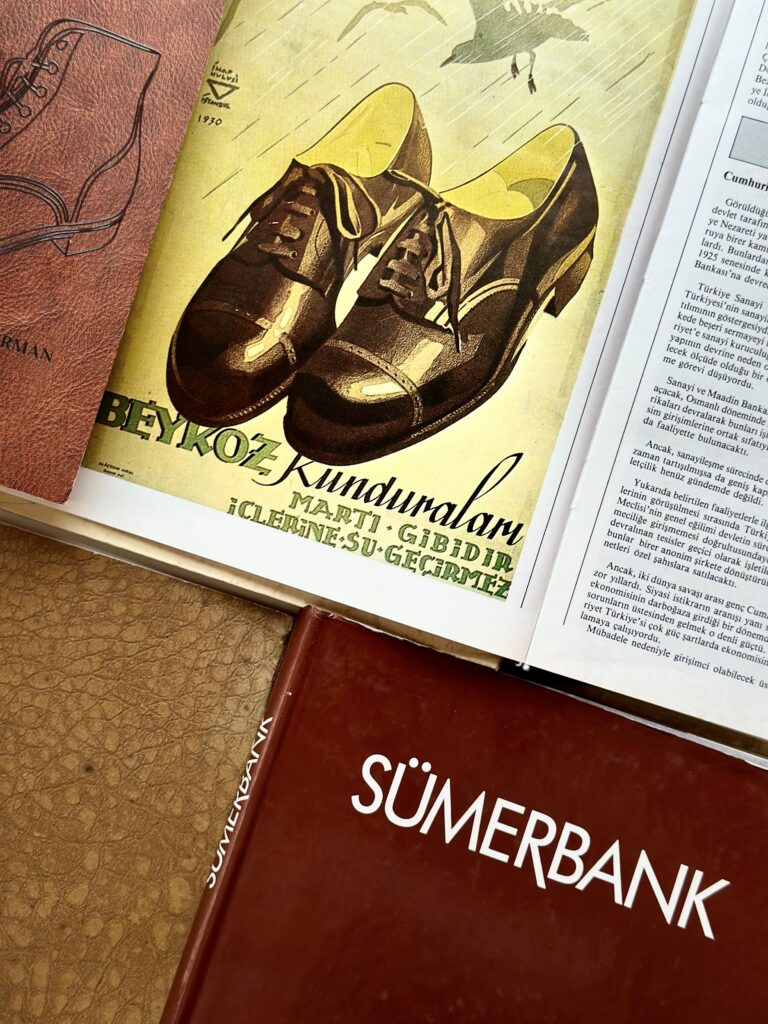
Photo: Yağmur Oltulu
With its archive and library collection, the Kundura Hafıza Archive and Research Center aims to document and preserve the past, open the present to discussion and build a foundation of knowledge to be passed on to the future. In this respect, with its openness to researchers from a range of disciplines such as history, business, sociology, literature, architecture and urban planning, the center aims to be a lively and productive meeting point.
At Kundura Hafıza, we invite everyone to research and to remember…
The Kundura Hafıza Archive and Research Center is open to all researchers working in the fields on which Kundura Hafıza focuses.
The collection of the library, open Monday to Friday from 10:00 to 17:00, can be browsed at kundurahafiza.org.
To submit a research request: beykozkundura.com/hafiza/arsivarastirma
[1] The Kundura Hafıza Oral History Collection, consisting of oral history interviews conducted with more than 200 employees of the Beykoz Deri ve Kundura Fabrikası, including testimonies about the daycare center, can be explored at hafiza.beykozkundura.com.
[2] A small part of the library collection of the Sümerbank Beykoz Deri ve Kundura Fabrikası is held today in the library of the Turkish Footwear Industry Research, Development and Education Foundation (TASEV). Kundura Hafıza plans to digitize these sources in 2026.
[3] Önder Küçükerman, Geleneksel Türk Dericilik Sanayii ve Beykoz Fabrikası : Boğaziçi’nde Başlatılan Sanayi (Ankara : Sümerbank, 1988), p. 281
[4] Sıddık Özbek Oral History Interview (May 27, 2016), Kundura Hafıza Oral History Collection
Erdi Yüksel
Kundura Hafıza Library and Archive Officer