17 October 2022
İlayda Güler – Bantmag*
As you know, James Bond films have a formulaic opening. Each film begins with credits rolling to an original theme song. Bond songs are in fact the series’ secret sauce, both because they set the tone for the action the audience is about to encounter and because they speak to the spirit of the time in which the current film is set. Since they are eagerly awaited with each new film and have become a pop culture tradition, they also mark an important milestone in the careers of the musicians who take on this responsibility. We took a closer look at the films in the “At 60: Bond, James Bond” program, together with their music.

The first act of the Bond adventure
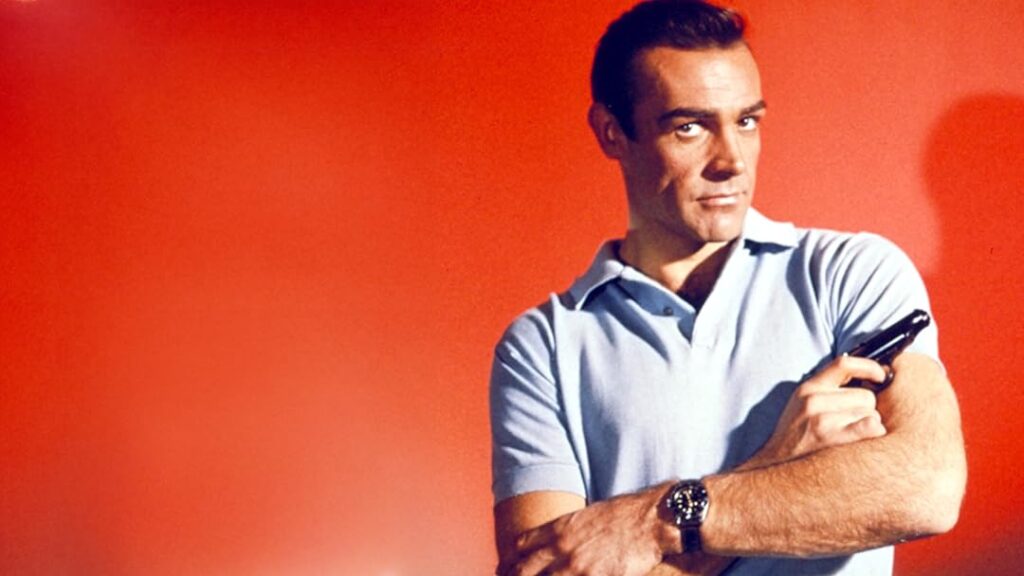
Screening on October 8 and directed by Terence Young, the first film starring Sean Connery is Dr. No. In it, James Bond sets off for Jamaica on the trail of a missing British agent. The signature theme performed by John Barry & Orchestra quickly draws you into the film with its highly repetitive composition, shifting tension and the cosmic effect it leaves on you. Some describe this music as a meeting of Debussy and guitarist Duane Eddy, who rose to stardom with his take on Henry Mancini’s theme for Peter Gunn.
When the calendar reads October 9, you will be able to watch the first Bond film shot in Türkiye on the Beykoz Kundura screen: 1963’s From Russia with Love. The legendary music of this production, which takes you on a tour of 1960s Istanbul with stops such as the Grand Bazaar, the Basilica Cistern and Hagia Sophia, is “From Russia with Love,” the song that shares the film’s title, echoing in Matt Monro’s velvety voice. Besides being the first pop song produced for a Bond film, it takes the agent a little away from his action-packed world and sets him sailing into romantic waters.

In the October 15 program’s Goldfinger, the lead role once again goes to Sean Connery. In this 1964 production, with Guy Hamilton in the director’s chair, Bond takes on a jewel smuggler, a man with the Midas touch, to prevent a nuclear disaster. Heard over the film’s golden opening credits, the Grammy-nominated song “Goldfinger” shines brilliantly with a refined orchestration that accompanies the powerful voice and punchy vocal delivery of Shirley Bassey.
In the following year’s release, Thunderball, Bond fights the threat posed by the bombs SPECTRE has seized from a hijacked bomber plane, which could destroy two cities in the US and the UK. The film’s mesmerizing opening, which plunges you into blue, purple, red and green waters, is accompanied by a song that adds new touches to John Barry’s theme and swells with the superb vocals of Tom Jones: “Thunderball”. A dizzying experience.
The screenplay of the series’ fifth film, 1967’s You Only Live Twice, was written by Roald Dahl, the author of Charlie and the Chocolate Factory. In the film, which screens on October 23, Bond’s path leads him to Tokyo to work with the Japanese Secret Service. In the opening credits, which scorch the screen with erupting volcanoes and flowing lava, we hear the John Barry and Leslie Bricusse composition that became a classic with its intro melody. As for the song that calls you into the realm of dreams, “You Only Live Twice”, Nancy Sinatra’s serene vocals on it loosen every muscle.
Scheduled for October 29 on the Bond program calendar, On Her Majesty’s Secret Service marks a turning point in the history of the series, because instead of Sean Connery, the lead in this 1969 film is an Australian model with no previous acting experience: George Lazenby. This time, James Bond battles the viruses of his archenemy Blofeld, brought to life by Telly Salavas, which could wipe out humanity. With its lyrics, “nothing more, nothing less, only love,” and Louis Armstrong’s crackly vocals leaving you with a bittersweet feeling, the song “We Have All the Time in the World” is both a celebration of true love and the footsteps of an approaching end.
In Diamonds Are Forever, in which Sean Connery returns as 007 James Bond for the last time, the mystery behind a diamond heist, just as the title suggests, is unraveled. Once again after Goldfinger, Shirley Bassey’s powerful vocals accompany Bond, who owes a debt of revenge to Blofeld, the man who turns out to be behind this scheme as well. The 1971 “Diamonds Are Forever” is known as the sexiest song in the Bond canon. Legend also has it that composer John Barry designed an eight-note melodic loop representing the eight facets of a diamond. It can be seen at Beykoz Kundura on December 3.

A Whole New Bond
Time to meet a new Bond: Roger Moore. Starting with 1973’s Live and Let Die, the actor we would go on to watch as James Bond for a long time finds himself, in his first adventure, at the center of a major drug operation while trying to solve a murder, on a journey that stretches from New York’s Harlem to the Caribbean. Over the flame-filled opening credits of the film, which you can see on December 4 in a print restored by MGM Studios, we hear a song by the band Paul McCartney formed with his wife Linda after the breakup of The Beatles, Wings: the Oscar- and Grammy-nominated “Live and Let Die”.
Producer Harry Saltzman, who, as the series’ earlier music suggests, was not much of a rock fan, agreed to this collaboration on the strength of the commercial potential the McCartney name brought, but loved the song once he heard it. Let us also recall that nearly 20 years after its original release, the song enjoyed a second life thanks to the cover by Guns N’ Roses.
The December 10 program features 1974’s The Man with the Golden Gun. The story begins with a message sent to the British Secret Service by the assassin Scaramanga, one of the most impressive villains in Bond history, brought to life by our very own Saruman, Christopher Lee: a golden bullet engraved with 007. It continues with James Bond’s journey along the Hong Kong – Thailand route. Although it is said that the silly lyrics of the accompanying song, “The Man with The Golden Gun,” give away that John Barry and Don Black wrote it in a rush to meet a deadline, Lulu’s fun rendition, with its shifting energy, will get you dancing.

Next up is the 1977 film The Spy Who Loved Me, which will be on the Beykoz Kundura screen on December 11. This time, Bond’s goal is to prevent a nuclear war. In the film, where we meet Jaws, one of the series’ iconic villains, James Bond works with KGB agent Anya Amasova to find a stolen Russian submarine. As in many of the films, the opening credits once again create a dreamlike atmosphere, and the dance on gun barrels is accompanied by Carly Simon’s inviting rendition of “Nobody Does It Better”.
The last film in the “At 60: Bond, James Bond” program and the 11th film in the series, Moonraker, screens on December 17. In Moonraker, Bond’s mission is to stop a billionaire of, predictably enough, Nazi origins, who plans to bring about the end of the world and build a new life for a superior race in space. The film’s signature song, following “Goldfinger” and “Diamonds Are Forever,” is the series’ third and final Shirley Bassey touch: “Moonraker”. This time, we hear this song about the dream of a love that seems less likely as the days go by, accompanied by silhouettes floating through different layers of space in the opening credits.
After the 11-film tour is complete, the first film of the series, Dr. No, returns to Beykoz Kundura on December 24, followed on December 25 by From Russia with Love, the first Bond production to make Istanbul its home.
*This article was originally published by Bantmag.