20 May 2022
The Türkiye screenings of Cinema of Commoning, the project bringing together 8 alternative cinemas and cinema centers from 8 countries, are coming to Kundura Sinema!
As part of the project, initiated under the leadership of the Berlin-based cultural project space bi’bak and bringing together Kundura Sinema from Türkiye, Sinema Transtopia from Germany, Documentary Club from Thailand, Cinema ARTA from Romania, Forum Lenteng from Indonesia, Cinema Akil from the United Arab Emirates, CCC from Chile and Cine Geração from Angola, the 8 films selected by the cinemas’ curators will be shown to audiences simultaneously in Istanbul, Berlin, Dubai, Chile, Cluj, Jakarta, Bangkok and Luanda.
A limited number of seats will be available, and the films, screened free of charge, can be reserved at beykozkundura.com.

bi’bak and various international partners are behind Cinema of Commoning, a project that aims to build a network and to gather knowledge about cinemas and cinema initiatives all over the world. Through mixed conversations, it hopes to create a statement that puts forward a future model of an alternative cinema facing the “public” in terms of accessibility, artistic freedom and financial sustainability. The project consists of two steps: starting in March, a collectively curated film program will be screened at partner cinemas in Bangkok, Jakarta, Istanbul, Dubai, Santiago de Chile, Cluj and Luanda. In June, a three-day symposium in Berlin will bring together partner initiatives, film professionals and cinephiles, with the aim of developing further concepts and strategies for sustainable spaces dedicated to film culture. In light of all this, Cinema of Commoning regards cinema as a transnational space for artistic and social practice, a space of public discourse, an agent of cultural memory and urban heritage, and a space where rarely accessible film and video formats are preserved and distributed.
Why Did They Choose These Films?
SİNEMA TRANSTOPIA’s pick:
Remake, Remix, Ripoff
Cem Kaya, Germany/Türkiye 2014, 96 minutes.
Berlin today is home to a large German-Turkish community that is an integral part of the city’s cultural life. Many films produced within the Turkish film industry (Yeşilçam), including comedies, action films and melodramas, have been hugely popular within this community. Shown in movie theaters and played at home on VHS players, Yeşilçam shaped not only the migrant film culture in Germany but also a generation of renowned German filmmakers. Despite its important role in the cultural and social life of the migrant community from Türkiye, this phenomenon is generally overlooked, and its presence in cultural discourse is almost nil. Cem Kaya dedicates his documentary to this remarkably prolific film industry, the strong bond it shares with its audiences, and the creative strategies it used to get around copyright issues. Remake, Remix, Ripoff is a film that has always inspired us, and it is a perfect fit for the transnational approach we embrace in our work at SİNEMA TRANSTOPIA.
– Malve Lippmann & Can Sungu, SİNEMA TRANSTOPIA
How can a new kind of cinema be created collectively in a transnational society? Bi’bak’s cinema experiment SİNEMA TRANSTOPIA explores cinema as a space of social discourse, exchange and solidarity. Its curated film series brings together diverse social communities and connects places both nearby and geographically distant; it links past, present and future and, moving away from a Eurocentric gaze, embraces transnational, (post-)migrant and postcolonial perspectives. SİNEMA TRANSTOPIA is a different kind of cinema, one that belongs to both local and international communities at once and understands cinema as an important public space of sociality; it regards film history as highly important for cultural memory work and is oriented toward diversity in film culture and film art. SİNEMA TRANSTOPIA builds a bridge between urban practice and film in order to create a space at the Haus der Statistik on Berlin’s Alexanderplatz that makes access possible, sparks debate, and educates, mobilizes, provokes and encourages.
KUNDURA SİNEMA’s pick:
Majub’s Journey / Majub’s Reise
Eva Knopf, Germany 2013, 50 minutes
Majub’s Journey tells the story of an African man who worked as an extra in the film industry during the Nazi era in the 1930s. Directed by Eva Knopf, this essay-like documentary retells the man’s life through historical documents, archival footage and photographs. While pushing us to rethink German postcolonial discourse, the film creates a different layer of awareness around memory and identity, helping us to reinterpret the present and to think about the past more critically.
– Buse Yıldırım, Kundura Sinema
DOCUMENTARY CLUB’s pick
The Emperor’s Naked Army Marches On
Kazuo Hara, Japan/Indonesia 1987, 122 minutes
Since most cinemas here are multiplexes showing similar blockbuster films, there aren’t many suitable options for Thai cinephiles. As both a distributor and a cinema, we try to create alternatives, especially for documentary films. Our current focus is on classics. Kazuo Hara’s films have always been compelling for the way they address social issues. His most notorious work, The Emperor’s Naked Army Marches On, shows us how controversial and divisive documentaries can be. The film examines the historical amnesia that has continued to poison Japanese society to this day. We always hold discussions after our screenings, and we believe this film will spark conversation among audiences about its subject and about Hara’s documentary method.
– Thanaphon Accawatanyu, Documentary Club
CINEMA ARTA’s pick
Cinema, Mon Amour
Alexandru Belc, Romania/Czech Republic 2015, 70 minutes
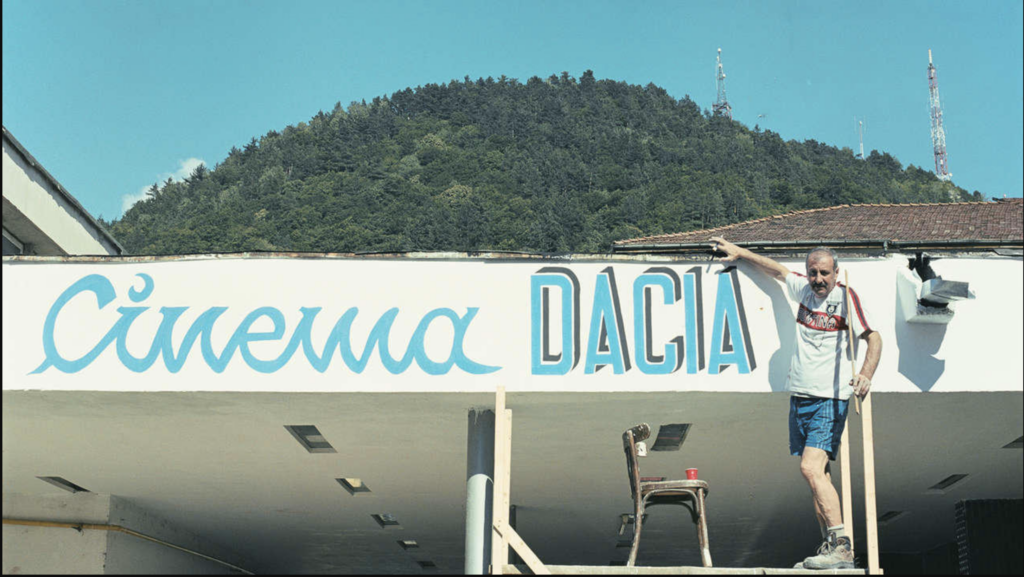
Cinema, Mon Amour follows Victor Purice and his team in their daily struggle to keep a cinema alive in Piatra Neamț (Romania). The protagonist dreams of bringing back the glory days of old but struggles to adapt to a harsh new reality. In a theater with no heating, slowly falling apart and receiving no support whatsoever from the state that owns the venue, this struggle is almost quixotic. It is, in fact, also the story of Cinema ARTA, which was renovated and brought back to life in Cluj-Napoca without any public support. Both are stories with happy endings, showing the power of a determined and passionate group of people who follow their dreams and bring about positive change in the communities they belong to.
– Monica Sebestyen, Cinema ARTA
FORUM LENTENG’s pick
Behind the Flickering Light: The Archive
Anak Sabiran, di Balik Cahaya Gemerlapan (Sang Arsip)
Hafiz Rancajale, Indonesia 2013, 154 minutes
Behind the Flickering Light: The Archive is personally precious to me. When I first got in touch with Forum Lenteng in 2012, it was still in production. Looking at a film history that is scattered, vast, important and on the verge of being forgotten, the film holds up a mirror to the state and conditions of contemporary Indonesian cinema. It unfolds through a conversation between Misbach Yusa Biran, founder of Sinematek Indonesia, the first and largest film archive in Southeast Asia, and my colleagues at Forum Lenteng. The film matters to us not only as a dialogue about the preservation of film as a medium, but also for what it tells us about how film can be made accessible to a wider audience, whether as a national treasure or simply as entertainment. In a country where film generally arrives as a product and outside of any discourse, Behind the Flickering Light: The Archive aims to trigger awareness, to make room for thinking about why we love cinema, and to get us thinking about the future.
– Yuki Aditya, Forum Lenteng
CINEMA AKIL’s pick
15.04.2022
A World Not Ours
Mahdi Fleifel, Lebanon/UAE 2013, 93 minutes
In this important community documentary, Palestinian-Lebanese director Mahdi Fleifel uses amateur video footage left by his father alongside new footage of life inside Ain al-Hilweh, the Palestinian refugee camp in Lebanon where he himself grew up. With his exile to Europe comes the guilt of having to document what remains of an existence while having nowhere to call home. With this beautiful blend of sensitivity and guerrilla filmmaking, A World Not Ours is an unprecedented testimony to the Palestinian cause from beyond Palestine’s borders. Cinema Akil hopes this film will be the starting point, or the continuation, of conversations and actions in solidarity with the Palestinian people.
–Butheina Kazim, Khalid Al Sabi & Louise Malherbe, Cinema Akil
CENTRO DE CINE Y CREACIÓN CCC’s pick
One Hundred Children Waiting for a Train
Cien niños esperando un tren
Ignacio Agüero, Chile 1988, 56 minutes
One Hundred Children Waiting for a Train is a portrait of the recent history of Chile, a country under dictatorship and rife with inequality. Guided by Alicia Vega, the film’s young protagonists are given the chance to discover their own films and design them through drawings. Never having been to the cinema before, they discover cinematography, movement, camera angles, film genres, Chaplin, Disney, Lamorisse’s red balloon and the Lumière brothers’ train. In this documentary, Ignacio Agüero reveals what CCC stands for: a space where cinema is a center of dialogue, creativity and community, where we support new filmmakers every day through workshops, screenings and talks, and where we strive to democratize cinema and access to culture.
– Dominga Sotomayor & Ignacio Ocampo, CCC
CINE GERAÇÃO’s pick
Beyond My Steps / Para Lá dos Meus Passos
Kamy Lara, Angola 2019, 72 minutes
Beyond My Steps is a film that highlights many aspects of the arts industry in Angola through a focus on contemporary dance. This documentary brings to light the challenges artists face and the boundless determination they must have in a country where art is still not given the value it deserves. “I want to live in a place where people believe in what I do and where I can once again feel like a free citizen,” says Daniel Curti, one of the dancers. Beyond My Steps also draws attention to the city of Luanda from a wider angle. Looking through different lenses, the audience gets to see the inner life of a city that can convey a narrative through film.
–Mirian Vanda & Fradique, Cine Geração