05 March 2026
There are still places in Istanbul that feel as if they are being discovered for the first time. As you move away from the crowds of the city, you find spaces where the pace of time slows down, places that are not merely visited but experienced… Along Istanbul’s shores, which narrow as they stretch north, the noise of the city falls away as the color of the Bosphorus gradually deepens. Located right at this threshold, at a point where water meets industry and nature meets memory, Beykoz Kundura is not just a restored factory complex; it is the story of Türkiye’s modernization, its labor history and its cultural transformation, embedded in a place. Spending a day here is less like following an events program and more like wandering through different layers of time. Witnessing the spirit of a factory, the memory of a neighborhood and a story that has evolved from production to art… Kundura invites its visitors not to a consumption-driven experience but to think, to remember and to slow down.
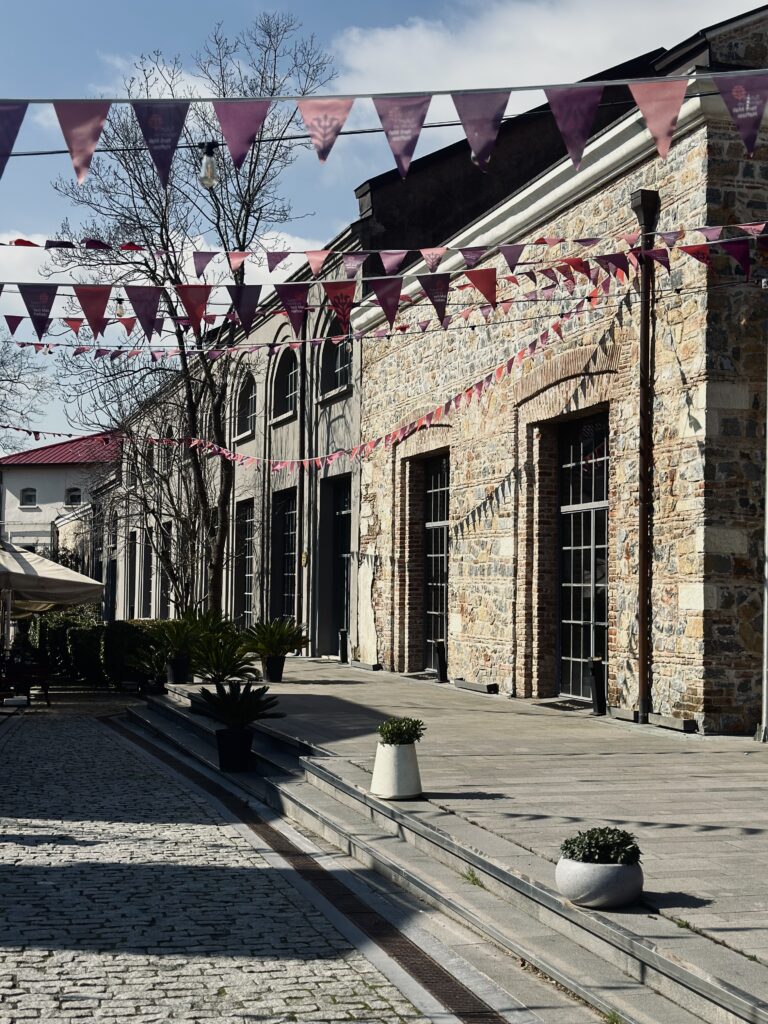
Starting the day early by walking through Kundura’s gates is the most powerful way to feel the true atmosphere of the place. As the morning light strikes the brick façades, it brings out the factory’s architectural character, while the calm that now fills the courtyards, once alive for years with the sounds of production, becomes all the more striking. This is not just a restored industrial building; it is the stage of a two-hundred-year history of production stretching from the Ottoman Empire to the Republic. The story, which began in the early 19th century with leather and shoe production facilities established to meet military needs, became one of the symbols of the country’s industrialization during the Sümerbank era. The production spaces, distinguished by their high-ceilinged buildings, large windows and functional simplicity, reveal the aesthetic potential of industrial architecture. This atmosphere also explains why Kundura has for years been a favored production venue for cinema and the performing arts. The texture of the place does not only tell of the past; it also makes room for new stories to be created.
For years, this site, where thousands of workers were employed and production never stopped, was also a center of life. The factory existed not merely as a workplace but as a neighborhood in its own right, even a small town. This is why one feels such a strong “sense of place” when walking around Kundura today. Rather than hiding its past, the place makes it visible. The marks on the brick walls, the large windows, the iron doors… All of them are witnesses to lives once lived.
The first stop of the morning program is the ‘Kundura’s Memory: A World Fit into a Factory’ exhibition, which conveys the factory’s memory most intensely and invites visitors into its inner world. Open from Wednesday to Sunday between 13:00 and 20:00, the exhibition brings visitors closer to the daily life of the factory, the stories of its workers and its culture of production. Ranging from employees’ personal belongings to archival photographs, and from documents recording production processes to oral history recordings, the exhibition makes visible not only the physical but also the emotional layers of the place, reminding us just how vast a world of life a factory really is. Focusing less on official historical narratives than on the small but lasting details of everyday life, the stories that carry the memory of lives born and raised within the factory turn visitors from spectators into witnesses. A note forgotten in a worker’s locker, a date jotted on the edge of a group photo, a poster left over from one of the factory’s social events… In the “Kundura’s Memory: A World Fit into a Factory” exhibition, each of these comes together as a piece of the memory of the place.
After the exhibition, experiencing the different layers of the place is one of the moments that deepens one’s relationship with Kundura. The rarity of industrial sites preserved on this scale in Istanbul makes the sense of spaciousness felt here all the more striking. The architectural silhouette, defined by its tall chimneys, together with the waters of the Bosphorus on one side and the tree-covered slopes on the other, creates a balanced atmosphere that softens the industrial harshness. This contrast—between nature and production, between silence and the noise of the past—is one of the essential elements that define Kundura’s character. The light, changing at different times of day, constantly reveals the architectural texture of the place anew.
This atmosphere is one of the reasons why Kundura has been a favored location for film and TV series shoots for years. Alongside the cinematic texture of the place, a management approach that allows production processes to flow naturally is also a decisive factor for creative teams. Shoots often turn into an organic production experience that takes shape together with the place, rather than feeling like a planned set.
The lunch break strengthens the social side of the experience. Eating at Demirane, the restaurant located inside the former factory and transformed while preserving the factory’s character, goes beyond an ordinary gastronomic experience; like the past and present meeting at the same table, it becomes part of the place’s historical continuity. Carefully set tables within industrial buildings offer a conscious invitation to slow down in the face of the fast pace of modern city life, giving concrete form to Kundura’s story of transformation. At Demirane, which stands out for an architecture that preserves the historical texture of the place, guests enjoy a gastronomic experience in which time flows not according to the speed of service but to the rhythm of the place.
At Beykoz Kundura, the rhythm of the place changes as the day progresses. The calm of the morning gives way to a livelier atmosphere. Adult and children’s workshops held throughout the month turn visitors from passive spectators into part of the creative process. In spaces where machines once ran, creative production takes place today; the rhythm of the machines has been taken over by the rhythm of art, design and craft.
This transformation is one of the elements that best sums up Kundura’s identity, showing that Kundura’s relationship with the past is not nostalgic but productive: production continues, but in a different form. Physical labor has given way to creative labor.
The ‘Müşterek Taksim Concert Series’, running until the end of May, is also part of this new form of production, bringing the acoustic and atmospheric potential of the place to the stage. Bringing together different genres of music, the concerts create an unexpected resonance in the factory’s voluminous buildings. The brunch with solo jazz piano, held at Yağhane on the first Sunday of every month, has become one of the rituals that strengthen Kundura’s connection with social life. An open buffet breakfast and live music turn the weekend into a getaway without leaving the city. Music, food and architecture come together as parts of the same experience.
Kundura’s program is not limited to putting together an event calendar; it embraces an approach that is consistent with the venue’s cultural policy. While hosting international theater and dance productions, it makes room for new work with concert series that support young musicians, and it continues to connect with collective memory through themed programs ranging from Domestic Goods Week to International Women’s Day. This continuity turns the venue into a living cultural platform that extends beyond seasonal events.
Toward sunset, the atmosphere of the place changes once again. The shifting tones that the light from the Bosphorus casts on the brick walls turn Kundura into something close to a film set with its own production design. The ‘An Evening at Beykoz Kundura’ program, held throughout the month of Ramadan, is one of the special gatherings that strengthen the collective experience of these hours and carry the social memory of the place into the present. Combining an open buffet dinner with a concert, this event evokes the communal way of life of the factory’s past and brings it together with the present day. The feeling of sharing, of being together and of spending time in the same place ensures the continuity of Kundura’s historical identity. The people who once met in the same courtyard after work have today been succeeded by visitors.
Toward sunset, as the light from the Bosphorus is reflected on the brick walls, Kundura’s atmosphere changes noticeably. The cinematic character of the place reaches its peak at these hours. Even slowing down along with the place and noticing one’s relationship with the surroundings becomes an experience in itself.
In the evening, Kundura takes on a new character, transforming into a stage for arts and culture. Concerts, performances and film screenings show that the factory’s rhythm of production continues today through art. The legacy of the film screenings organized for workers during the factory years lives on today through curated selections. This continuity shows that Kundura does not use the past as a backdrop but transforms it into a living cultural ground. The social life of the past continues through the cultural production of today.
Leaving Kundura at the end of the night, what one feels is less the peace of a completed day than the sense of being part of an ongoing story. The feeling of having wandered through different layers of time in a single day, of having witnessed the transformation of a place and of having formed a new relationship with the city… Because this is not just a place to visit; it is a site of memory where time, labor and cultural production are intertwined. This continuity, rarely found within Istanbul’s ever-changing face, is what makes Kundura unique.
Not Just a Day, but an Experience
A day spent at Beykoz Kundura offers far more than a scheduled event calendar, providing an unusual experience for the modern city dweller: rhythm instead of speed, production instead of consumption, depth instead of superficiality. This is a place that preserves Istanbul’s memory while also opening up to the future. Reinterpreting industrial heritage through arts and culture, this venue is one of the most striking examples of the city’s story of transformation.
Located right at the cultural heart of the city, Beykoz Kundura, with the bridge it builds between Istanbul’s past and future, offers not just a destination but a way of thinking. Here, time is not linear; it is layered. You can hear the sound of a factory, the melody of a concert and the rhythm of the water lapping against the shore all at once. For those who want to slow down a day in Istanbul, get away from the crowds and touch both the past and the present at the same time, Beykoz Kundura is like a time capsule hidden within the city.
Beykoz Kundura reminds its visitors that a place can be reborn without losing its own memory, and that what makes a place valuable is not only its architecture or its events but the stories that accumulate within it. At Kundura, these stories are still alive, still productive and still open to being shared. As one of the rare places that remind us there are still places in Istanbul worth discovering, feeling and reflecting on, Beykoz Kundura offers its visitors not just a day but an experience that will linger in memory for a long time.