27 April 2023
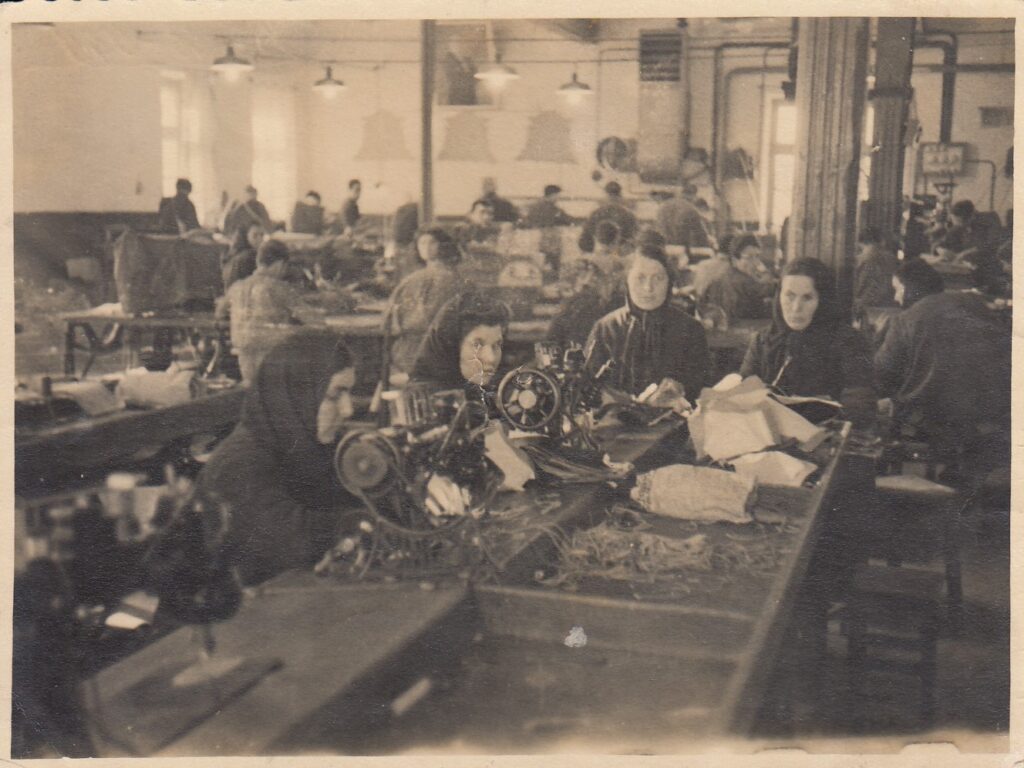
Sümerbank Beykoz Deri ve Kundura Fabrikası (Beykoz Leather and Shoe Factory), which has become a multilayered cultural heritage of the history of labor and workers in Türkiye, embodied a factory model that never set labor apart from production and was home to a solidarity in which workers came first.
Nurtaç Buluç*

The foundations of Beykoz Kundura—regarded as one of Türkiye’s most important industrial heritage sites and, since 2018, one of Istanbul’s leading centers for arts and culture—were laid in the early 1800s as the Beykoz Broadcloth and Paper Factory.
Converted by Abdülhamit II in 1886 into the Hamidiye Paper Factory, a paper and leather manufacturing works, the Factory became, with the founding of the Republic and as Sümerbank Beykoz Deri ve Kundura Fabrikası, a multilayered cultural heritage for the history of labor and workers in Türkiye as well.

Strikes, resistance and union struggles were part of the Factory
Beyond being a factory complex, Beykoz Kundura was a living space with a population of up to three thousand, encompassing a nursery, a cinema, a social club, a health clinic, a library and staff housing. Strikes, resistance and union struggles were inseparable parts of life at the Factory. The proletarian spaces formed by industrial workers, together with social and economic life, merged with the place itself to shape the reality of the Factory and of Beykoz. Through all of these formations, the Factory was also shaped by its spaces, by the labor of its workers and by the bonds that this labor forged.

A WORKING-CLASS NEIGHBORHOOD CULTURE DEVELOPED
Beykoz Deri ve Kundura Fabrikası had become a vast living space, where workers were paid according to their output under a planning system, where social life was active, and around which a working-class neighborhood culture took shape.
According to an archival document from 1935, the Beykoz Deri Kundura Fabrikası Consumer Cooperative was established to carry out relief work for the workers employed at the Factory, thereby providing them with financial support.(1) Another archival document, from 1950, records that the Beykoz Deri ve Kundura Fabrikası Workers’ Building Cooperative was founded to meet the workers’ housing needs.(2) The Factory embodied a factory model that never set labor apart from production and was home to a solidarity in which workers came first.

LEATHER WORKERS UNIONIZED FOR THE FIRST TIME
Leather workers, who had been among the key actors of the labor movement through the union associations they formed in the Ottoman era, came together under a single union for the first time in 1947, the year the right to union organization gained a legal framework (under Law No. 5018 on Workers’ and Employers’ Unions and Union Confederations).

THEY SHAPED TODAY’S WORKING CONDITIONS
The Beykoz Leather Goods Industry Union was founded in 1947, followed by the Deri-İş Union in 1948. The legal recognition of workers’ rights such as collective bargaining and the right to strike at that time gave rise to a deep-rooted class movement that has shaped today’s working conditions.

KUNDURA HAFIZA’S ORAL HISTORY WORK
As part of the oral history work that Kundura Hafıza launched in 2015 in collaboration with the History Foundation (Tarih Vakfı), and which continues today, we interviewed nearly 200 people who lived and worked at the Factory. Through these interviews, we also recorded a wealth of information about the working class, unionization and class struggle at Beykoz Deri ve Kundura Fabrikası. Here are a few of them…

“A BEYKOZ CULTURE WITH ANATOLIAN CULTURE WITHIN IT WAS BUILT”
“Kundura was the first factory here; it was the largest-scale organization in Beykoz. In fact, it wasn’t only a factory—this place was a social center, a living space. And the factory had a character of its own here, a way of life it had created for itself. People who came from different places in Anatolia, from different cultures, had formed an Anatolian culture here, specific to the factory, centered on the factory, under the banner of the factory. A Beykoz culture under the banner of leather and shoes, you know… a Beykoz culture with Anatolian culture within it, really—that’s what they had built.”
Yusuf Kırtorun (He worked as a laborer at the Factory.)

“WE WENT ON STRIKE FOR A FULL 54 DAYS”
“I was a representative during the strike. They even set up tents here; there were people on watch all the way to where this Mobil station is. In the evenings we’d bring them, all of them, stuff, you know—food was being brought to the shore and so on; there were 7 or so, 8 friends, and together with them we’d bring their meals by car. As a union, we asked for a raise. We went on strike on a Wednesday. The strike was well prepared; Emin Bey called in those on strike duty and gave each of them a task: tents will be set up over there—they were set up at the gate there, up above as you head toward that Mobil station. And also, here where you are, four tents were set up over there, and in the tents, you know, tea stations and whatnot were prepared. That was in ’75, and it lasted a full 54 days. After 54 days they called them to Ankara, so Emin Bey and the others went. Four people went then, and anyway they agreed on some modest amount or so; for those times, well, it was said, ‘God bless it anyway.’ That’s how the strike went—we went on strike for a full 54 days.”
Orhan Dinkay (He worked in the Factory’s Planning Office.)

“THE SPRING OF MY LIFE WAS SPENT HERE, AND IT WAS A VERY GOOD ONE”
“Our lives, I mean, how should I put it, our youth—I really did come in at 22 and leave at 47. The best period, what can I say, let’s call it the spring, the spring of a person’s life was spent here. And it was a very good one; I’m so glad I came. It’s a matter of fate, but, for example, I stayed single here for 7 years, in the boarding house. With the friends in the married staff housing, we were like a family. We were like brothers. Dropping by their homes at all hours, them inviting us over for dinner—it truly was a family. Let me put it this way: there’s a saying within Sümerbank, Beykoz can’t be told, it has to be lived. And it really is so. Beykoz can’t be told, it has to be lived. We ate and drank here like a family, sat together, got up together. We were like a family here. The smell? After a while… of course, when we first started and they were showing us around the factory, touring the leather plant, there really was a very heavy smell. When you first arrive, that smell hits you very differently, but over time, as you work at your job, it builds a sort of immunity, you get used to that smell; honestly, I didn’t really mind that smell much.”
Abdullah Kaya (He worked in the Factory’s Machinery Directorate.)
https://www.youtube.com/watch?v=YEOEoBOm3Xc&list=PL4MOdOLTxZ93j4aBIFrI_EjUWTpCQBB83
*Nurtaç Buluç – Kundura Hafıza Archive and Research
References
1- Presidency of State Archives, Republican Archives, Prime Ministry Directorate of Decrees, Archive No: 30-18-1-2.
2- Presidency of State Archives, Republican Archives, General Directorate of Transactions, Archive No: 30-18-1-2.
3- In 1968, Sümerbank launched a lyrics and composition competition for the Sümerbank Anthem. The Sümerbank Poetry Anthology is a compilation of some of the poems submitted to the competition.