30 July 2022
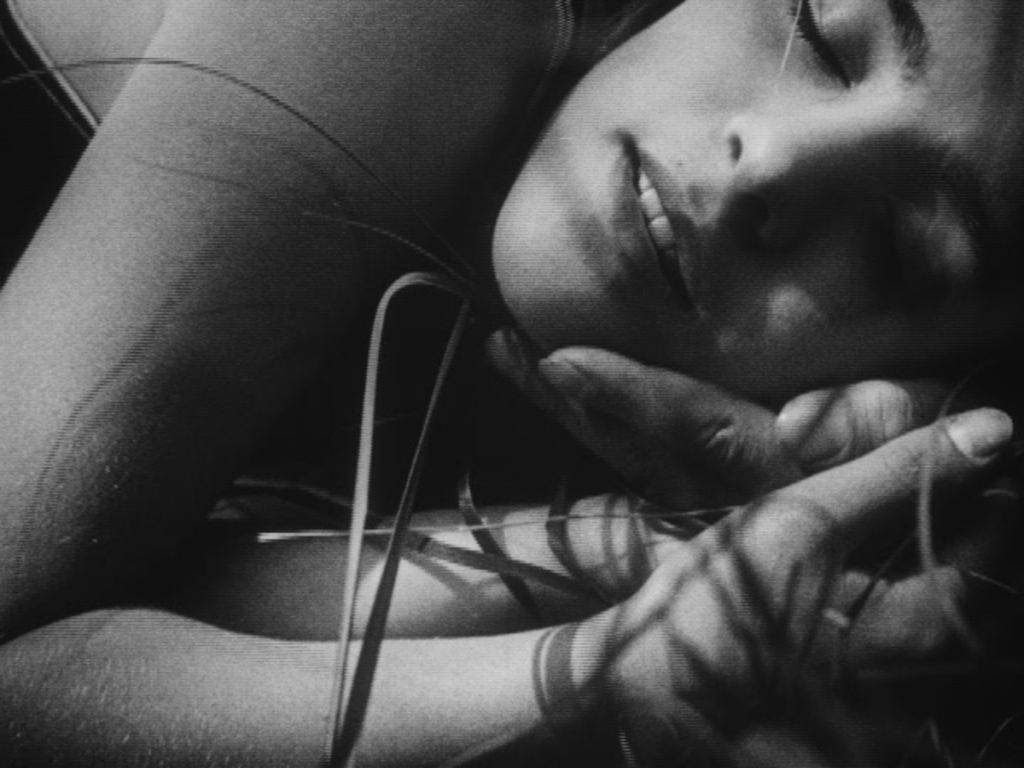
Screening in Türkiye for the first time as part of A Summer Night Festival, the silent film classic “People on Sunday” is a unique experiment that brings together documentary and fiction, the anonymous and the personal. Telling the story of how ordinary people celebrate life on an ordinary Sunday in Berlin, the film not only tells us a great deal about life in 1929 but also offers a chance to see the lost Berlin of just before the Great Depression and Hitler’s Germany.

Originally titled “Menschen am Sonntag,” “People on Sunday” was one of the first films to dispense with the star system, with drama and with the demands of commercial cinema.
The 1930 German production was the first project of a group of young people living in Berlin, all of whom would flee the Nazi regime and become important figures in Hollywood. Of the duo in the director’s chair, Robert Siodmak successfully blended techniques he had picked up from German Expressionism into American cinema, especially film noir, and became one of the A-list directors of the era with classics such as “Son of Dracula” (1943), “Phantom Lady” (1944), “The Suspect” (1944) and “The Killers” (1946). The second director, Edgar G. Ulmer, would go on to make many B-movies that are considered cult films today, such as “The Black Cat” (1934), “The Naked Dawn” (1955) and “Isle of Forgotten Sins” (1943).
The original story is based on a piece of reportage by the brother of director Robert Siodmak, Curt Siodmak. Unlike his older brother, Siodmak turned to horror and would go on to create many horror classics whose remakes we still watch today, such as “The Invisible Man Returns” (1940), “The Wolf Man The Wolf Man Writer” (1941), “I Walked with a Zombie” (1943) and “13 Demon Street Writer” (1959).

The screenplay was written by Billie Wilder, who would flee to America and change his name to Billy. Wilder, who would go on to make countless classics such as “Sunset Blvd.” (1950), “Sabrina” (1954), “Some Like It Hot” (1959) and “The Apartment” (1960), would be nominated for an Oscar 21 times for his films and would win the statuette 7 times, including an Honorary Award.
Credited with the film’s exquisite images, Eugen Schüfftan had worked on the special effects of many pioneering films, including “Metropolis” (1927). Also the creator of the optical special effect known today as the Schüfftan process, Schüfftan would first flee to France and then settle in the US, winning an Oscar for black-and-white cinematography in 1962 for his work on “The Hustler.”

Camera assistant Fred Zinnemann would go on to win four Oscars in the Best Director category for “From Here to Eternity” (1953), “The Sundowners” (1960), “A Man for All Seasons” (1966) and “Julia” (1977), and to make countless classics.
Of the film’s producers, Moriz Seeler was murdered in the Holocaust, while Seymour Nebenzal, who managed to escape, would continue working as a producer in America until the early 1960s.

Shooting began in June 1929 and lasted until the end of December. The six young people, who worked other jobs six days a week, came together on Sundays and completed the film on a low budget of around 9,000 Marks.
The film made it past the censors and was first screened in February 1930. While the whole crew feared that no one would like it, the film received acclaim and praise beyond all expectations. It was compared with Walter Ruttmann’s “Berlin: Symphony of a Great City” (1927) and Dziga Vertov’s “Man with a Movie Camera” (1929), and over the years it became a cult film.

While the screenplay was being written, no one was quite sure exactly how the work was divided. As with many films that have become legendary, everyone has a different account of who did what. Billy Wilder said the script consisted of 7 pages, while someone else claimed it was a 30-page script. The actors, for their part, said there was no script at all and that everything they did in the film was either natural or improvised.
“People on Sunday” became one of the ancestors of the “films with non-professional actors” so often seen in today’s cinema. It was the first film experience for all the actors, and they played themselves: a taxi driver, a model, a film extra, a shop assistant and a wine seller. All but one of them never even considered continuing, and they went on with their lives.

Sadly, the original, complete print of the film is lost. A Summer Night Festival screens a version based on a print held in the archive of the Netherlands Film Museum. Missing scenes were added using prints from the Swedish Film Museum, the Cinémathéque Suisse, the Belgian film archive Cinémathéque Royale de Belgique and the Fondazione Cineteca Italiana in Milan, and this version was completed in 2005. While the original print was 2,014 meters long, the current print is 1,839 meters long.
Visually memorized by Berliners, who identify with it, the film has become one of the first that comes to mind for anyone curious about what life was like in Weimar Germany and its Berlin. For the curious, let us note that the actors preparing for the German miniseries “Babylon Berlin”, which streamed on Netflix, were specifically shown “People on Sunday.”

As one critic put it: “This film gives us a magnificent weekend and serves as a reminder, in difficult times, to live in the moment and to take joy in who you are.”

“People on Sunday” meets audiences in Türkiye for the first time on the evening of Friday, August 5, as part of A Summer Night Festival, accompanied by the music and live performance of the Icelandic electronic and experimental pop band Múm.