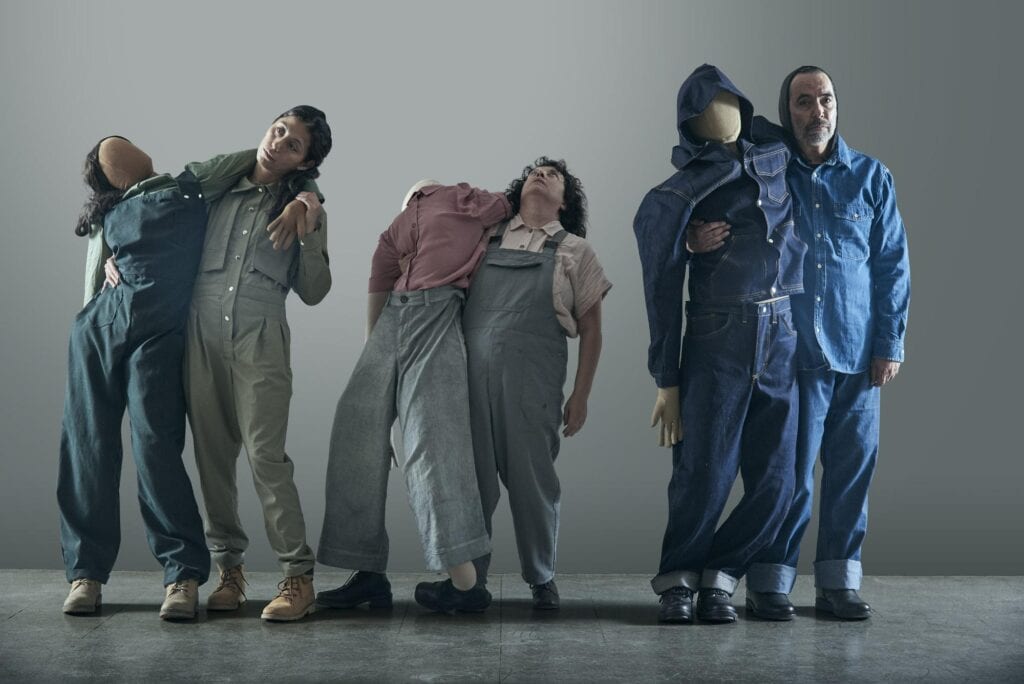
A lecture on non-anthropocentric, non-humanist theater by Manuela Infante, playwright and director and one of the distinctive voices of Latin American theater.
Given in 2019 as part of the Teatro a Mil Festival by the artist, who comes to Istanbul as a guest of #KunduraSahne with her play “How to Turn to Stone?”, this masterclass offers a conversation that opens doors not only for theater lovers but also for those interested in philosophy and psychology.
HOW TO TURN TO STONE?
Friday, November 4, 2022 / 21:00
Saturday, November 5, 2022 / 19:00
Sunday, November 6, 2022 / 17:00
MANUELA INFANTE is a Chilean theater director, playwright, screenwriter and musician. She completed her master’s degree in Cultural Analysis at the University of Amsterdam. Between 2002 and 2016 she created projects with the company Teatro de Chile, writing and directing works with ongoing support from Chile's arts funds. In 2019 she became the first Chilean theater maker to be invited to the Venice Biennale, with her plays “Estado Vegetal” and “Realismo.”
MASTERCLASS: Manuela Infante
2019, in Spanish with Turkish subtitles, 62’
Production: La Copia Feliz Producciones | Team: LAB Escénico, Teatro a Mil Foundation
November 4-6, 2022
Masterclass: Manuela Infante
August 28, 2022
Black Swan: The Price of Perfection
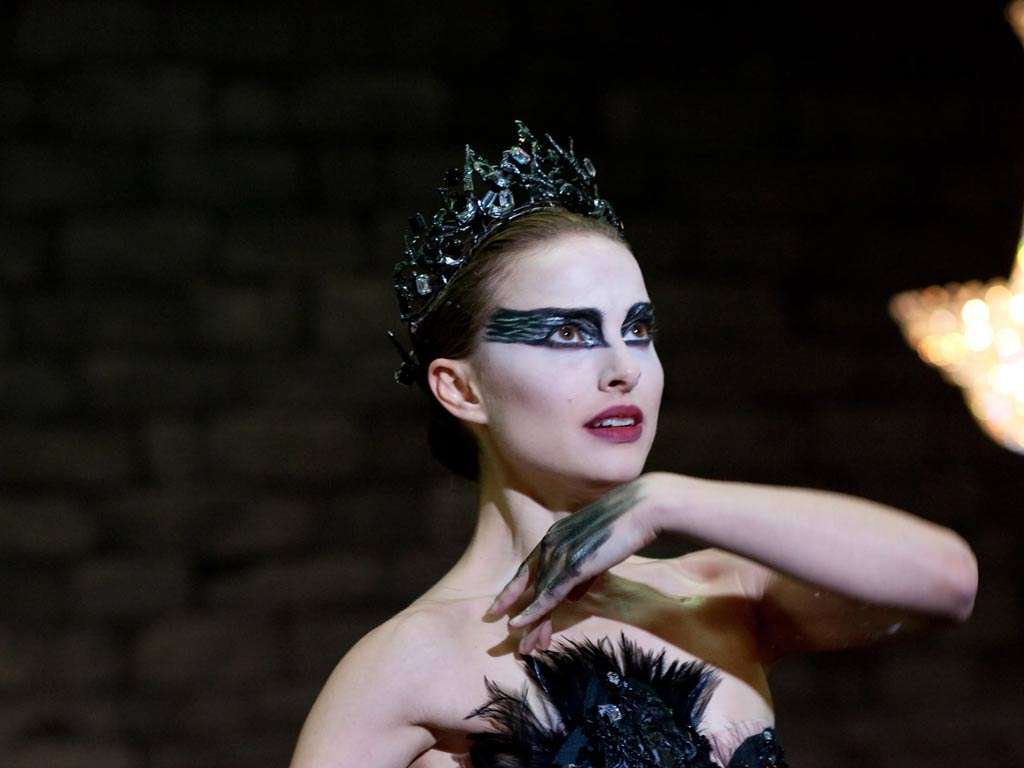
Darren Aronofsky’s “Black Swan,” which was also screened as part of A Summer Night Festival, has a ‘performance’ at its center: throughout the film, the main character Nina is in pursuit of the ‘perfect performance,’ and there is almost nothing she would not do for it. What is the nature of the quest that drives Nina so strongly? Does this motivation lead the character toward absolute success, or toward a tragic end?
The development, and even the perfection, of our faculties has been an accepted principle since Ancient Greece. According to Aristotle, nothing in nature is superfluous: if a being is endowed with a faculty, it is obliged to develop and use it. But up to what point is this perfecting to be considered "reasonable"? Can it be seen as legitimate, especially in art, for people to harm themselves and others in the name of perfection? Looking at the history of philosophy, we find two possible answers to these questions:
1) What is truly perfect cannot be contrary to reason or self-destructive. This tradition rejects the idea that art is an activity born of pain (and that, to some extent, causes pain). Although art is closely tied to the formal, the ideal and our emotions, it is fundamentally a rational activity. It is therefore more appropriate in art to stay close to reasonable measures, universal standards, and the aesthetic norms and schools of the time. (Keywords: Apollo-Wisdom-Conformity to Nature-the Mimesis approach in art-Kant)
2) True perfection can be reached only by leaving even reason behind, and true art is born of pain. Pain fuels creativity; we can become artists in the true sense only if we transform the pain we experience into an aesthetic experience. From this perspective, reason at times stands as an obstacle in the way of art, dampening its destructive, re-creative and displacing effects. Human beings are fundamentally artistic, not rational, beings. (Keywords: Dionysus-Romanticism-Aestheticism-Nietzsche-Kierkegaard)
Following the narrative path along which these two answers endlessly clash, and drawing inspiration from ‘Black Swan,’ the FelsefeLab talk ‘The Price of Perfection’ invites us to reflect on art, pain, death, perfection, the body, reason and gender. - Dr. Umut Eldem
April 6, 2021
Metaphysics: Is the Force with Us?
Metaphysics: Is the Force with Us?
In this talk, we examine, in light of Hegel’s philosophy, the metaphysical and social bond of the Force, which in the Star Wars universe is used by both the Jedi and the knights of the Empire and is said to be spread throughout the entire universe. Drawing on Hegel’s ideas about Spirit/social consciousness, we aim to hold a discussion about both the Star Wars universe and our own philosophical assumptions, through topics such as the coexistence of the good and evil sides of the Force; the training, virtue and sociality required to use the Force; the Force as an extension of individual will; and the influence of societies’ ways of life, beliefs and values on metaphysical understanding.
Keywords: The Force, will, causality, dialectics, the spirit of the age
Thinkers: Hegel, Stephen Houlgate, James Lawler, Jan-Erik Jones
April 20, 2021
Politics: Opposite or Mirror Image?
Politics: Opposite or Mirror Image? The Empire and the Rebels
Politics: Opposite or Mirror Image? The Empire and the Rebels At the center of almost every Star Wars film, we see the struggle between the authority of the Empire and the Rebellion that rises up against it. While the Empire emphasizes unity, obedience, conformity and hierarchy, the Rebels value equality, freedom, solidarity and participation. But could this picture be somewhat misleading at first glance? If there is a kind of republicanism within the Empire, and ambitions for power resembling those of the Empire within the Rebels, can we really say that this struggle is between opposing views? In this talk, drawing on Plato, Kant and, once again, Hegel, we will try to understand the nature of the political conflicts in the Star Wars universe. In doing so, of course, we will also need to touch on similar struggles in world history.
Keywords: Republicanism, Empire, rebellion, terrorism, just order, hierarchy, equality
Thinkers: Hegel, Kevin Decker, Brian Cameron, Joseph Long, Greg Littman, Adam Barkman
May 4, 2021
Ethics: How Does a Good Jedi Live?
Ethics: How Does a Good Jedi Live?
Many different ethical approaches can be found side by side in the Star Wars universe. The Jedi Order and Stoicism, Luke and Anakin as Knights of Faith, loyalty and betrayal, the struggle between father and son, and moral dilemmas at the edge of life and death are just a few of the themes we encounter in almost every Star Wars film. This talk seeks to question how a notion of “the Good” that would bring these themes closer together is treated in the Star Wars universe, and to see how the approaches popular in the ethics literature in recent years (deontology, consequentialism and virtue ethics) can be brought together through this fiction.
Keywords: Stoicism, Deontology, Virtue ethics, self-realization, moral dilemmas
Thinkers: Kant, the Stoic School, Daniel Malloy, Judith Barad, William Stevens, Matt Hummel, William Lindenmuth
January 28, 2021
Are Humans Artificial Intelligence?
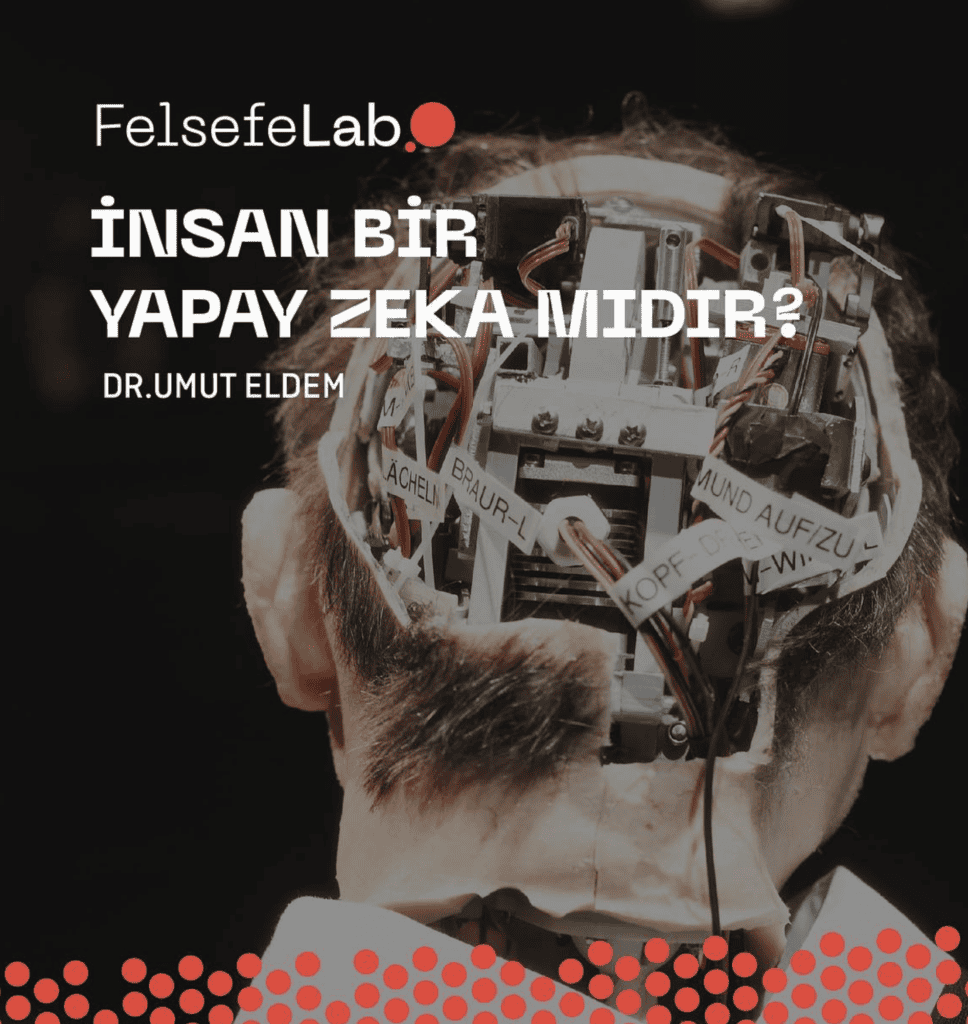
Are Humans Artificial Intelligence?
Thanks to research in artificial intelligence, we are in fact also developing new perspectives on human intelligence. In light of findings in fields such as behaviorism, evolutionary psychology, neuroscience and genetics, many thinkers have begun to argue that humans, too, are something "programmed." In light of these developments, it seems we will need to reconsider many of the things we believe to be uniquely human: free will, memory, love, aesthetics, language... Taking as its starting point the play “Uncanny Valley,” which is being streamed online at Beykoz Kundura, the talk follows in the footsteps of thinkers such as Hubert Dreyfus, Jacques Derrida and Benjamin Libet to open up for discussion concepts such as the philosophy of technology, behaviorism, free will and philosophical anthropology.
Keywords: Uncanny Valley, Philosophy of Technology, Behaviorism, Free Will, Philosophical Anthropology
Thinkers: Hubert Dreyfus, Jacques Derrida, Benjamin Libet
February 11, 2021
Artificial Intelligence Rights
As artificial intelligence becomes integrated into our lives in increasingly complex ways, a new ethical field has begun to emerge. If a future in which humans and robots with artificial intelligence live side by side is very near, then there are many legal, political and moral issues we need to think about. In this talk, we will examine some of the questions in this field: Can beings with artificial intelligence be considered individuals with rights and responsibilities? What cognitive and/or emotional qualities must they have in order to be considered as such? Is it morally reasonable to continue artificial intelligence research without answering these questions?
Keywords Robot Rights, Autonomous Vehicles, Ethics of AI, Moral Agency
Thinkers: Peter Singer, Colin Allen, Gary Varner, David Gunkel, Emmanuel Levinas
February 22, 2021
The Synthetic World of the Future
We usually understand history through technological breakthroughs. The beginning of tool use, the development of agricultural techniques, the compass, gunpowder, the printing press, the steam engine, electricity, atomic energy and the internet are each regarded as developments that closed one era and opened a new one. After each of these technological breakthroughs, the world was never the same again. It would not be wrong to say that artificial intelligence, too, is a "leap" in our historical journey. What kind of future is artificial intelligence research taking us toward? Can pushing technological possibilities to their limits solve our chronic problems such as the climate crisis, economic inequality, violence and the sharing of resources, or will it create new problems that may not even be solvable? Does the arrival of what is called the Singularity mean the end of humanity? This talk explores various philosophical and scientific claims about the future of artificial intelligence.
Keywords: Singularity, Transhumanism, Consciousness, Dystopia, Futurism
Thinkers: Mark Coeckelbergh, Vincent Müller, Luciano Floridi
May 29, 2021
KunduraLAB: PerformLab 1
Designed by Kundura Sahne together with Ayşe Draz and Pelin Başaran, PerformLab is an interdisciplinary and international program for developing concepts and practice in the field of performance. PerformLab aims to offer new perspectives to artists from different disciplines who are interested in interdisciplinary work. The program’s first workshop is organized in partnership with Productiehuis Theater Rotterdam, a research and development institution for new-generation artists in the Netherlands, and with the support of Dutch Performing Arts. By bringing together artists from Türkiye and the Netherlands, it aims to plant the first seeds of potential collaborations and of a sustainable artistic dialogue between the two countries.
The first edition of the workshop, hosted by Beykoz Kundura in Istanbul and held over 7 days from May 29 to June 6, 2021, brought together Cherish Menzo, Benjamin Kahn, Khadija El Kharraz Alami and Samara Hersch from the Netherlands, and 9 artists from Türkiye selected through an open call*. The artists came together to share their artistic practices and research processes with one another and supported each other in developing their methods and ideas.
Over the course of a week, the participants engaged with the distinctive working methods of the visiting artists from the Netherlands in the field of performance and, in a workshop accompanied by Türkiye-based artist İlyas Odman as Art Fermenter, made their own pickles, interpreting their artistic processes through the concept of fermentation.
*The open call is open to artists from Türkiye who are interested in creating work in the field of performance and who have experience in this field.
Beykoz Kundura KunduraLAB: PerformLab
Artistic Direction / Project Design: Ayşe Draz, S.Buse Yıldırım, Melih Gençboyacı, Pelin Başaran Project Coordination Ayşe Draz Project Partners Productiehuis Theater Rotterdam, Kundura Sahne Project Supporter Dutch Performing Arts, Beykoz Kundura Application deadline: March 5, 2021 Announcement of results: March 22, 2021 Workshop: May 29 – June 6, 2021JURY
Pelin Başaran / Performing Arts Curator and Producer
She leads the artistic program of Contact Theatre in Manchester. After graduating from the Department of Public Administration and Political Science at Middle East Technical University, she completed her master’s degree at the Atatürk Institute of Boğaziçi University. She was part of the founding team of the contemporary performance venue garajistanbul, where she worked as international projects manager. She served as founder and director of the non-profit PARC, which aims to contribute to artistic development in the performing arts. She launched the initiative Siyah Bant – Freedom of Expression in the Arts, where she continues to work as a researcher and co-director.Ayşe Draz / Artist
She pursues her research and artistic work in the field of performance. She completed her undergraduate studies in Theatre, International Studies and Comparative Literature at Northwestern University and, after a year at Bard College Berlin, her master’s degree in the Department of Performing Arts at Middlesex University. She worked on many projects with Studio Oyuncuları as assistant director, actor and instructor. She worked as dramaturg with Ayşe Orhon (Hava/2010) and Gizem Bilgen (Hiatus/2014), and as performer and assistant director with Semih Fırıncıoğlu (İKİ/2017). Together with Anne-Marije Van Den Bersselaar from the Netherlands, she designed and ran Dramaturgy Lab 1.0 in Istanbul (Aksanat/2017). With German artist Marlin de Haan, she designed and directed the performative installation “Once I set foot Outside” (2018) and the performance “panorama radio” (2019). Since 2006 she has collaborated with :mentalKLINIK in various processes such as research and production. In 2018 she founded Tiyatro Hemhâl together with Hakan Emre Ünal and Nezaket Erden. She is a member of the Theatre Critics Association and the performing arts editor of Art Unlimited magazine.Melih Gençboyacı / Artist, Curator, Hatha Yoga Teacher
He is an artist, curator and Hatha Yoga teacher. While studying Economics at Bursa Uludağ University, he transferred to the Acting Department of the Faculty of Fine Arts at Dokuz Eylül University. After graduating, he joined the Mime Department of the Amsterdamse Hogeschool voor de Kunsten in the Netherlands on a special scholarship. After graduating from there, he continued his work as part of collectives such as Schwalbe and Copycats. In 2017 he took a break from his work in the performing arts and became a Hatha Yoga teacher. He then received his master’s degree from the “DAS Theatre - Extended Curation” program in Amsterdam. As a curator, he continued to explore forms of protest by creating new rituals that could serve as a vehicle for political redefinition. In connection with this, he founded “The Embassy Series.” He worked as an arts advisor on internationalization at Performing Arts Fund NL and on cultural projects for the Municipality of The Hague. Alongside his own curatorial practice, for the past two years he has served as Artistic Coordinator of Productiehuis Theater Rotterdam, Theater Rotterdam’s research and development institution supporting the development of new-generation artists.S.Buse Yıldırım / Arts and Culture Director, Beykoz Kundura
A young cultural entrepreneur and film artist based in Istanbul. Driven by her interest in the creative sector and in different cultures, she first completed a foundation degree in art and design in Brighton. As she discovered contemporary art, she turned toward theory, completing her bachelor’s degree in Theoretical Art History in the Visual Cultures department at Goldsmiths, University of London, and working on various exhibition projects. Her desire to focus on film and video took her to Paris, where she completed a second bachelor’s degree in documentary directing at the ESEC film school. Since 2012 she has been shaping the arts and culture identity of Beykoz Kundura, a place she had long dreamed of. Having launched Beykoz Kundura’s oral history and archive project, Kundura Hafıza, Yıldırım serves as arts and culture director and curator of Kundura Sahne and Kundura Sinema. Through the production company she founded during the same period, Lita, she designs various audiovisual projects while realizing her own film/video projects through ethnographic practices. She completed her master’s degree in Visual and Media Anthropology at Freie Universität Berlin in 2019.
April 22–27, 2024
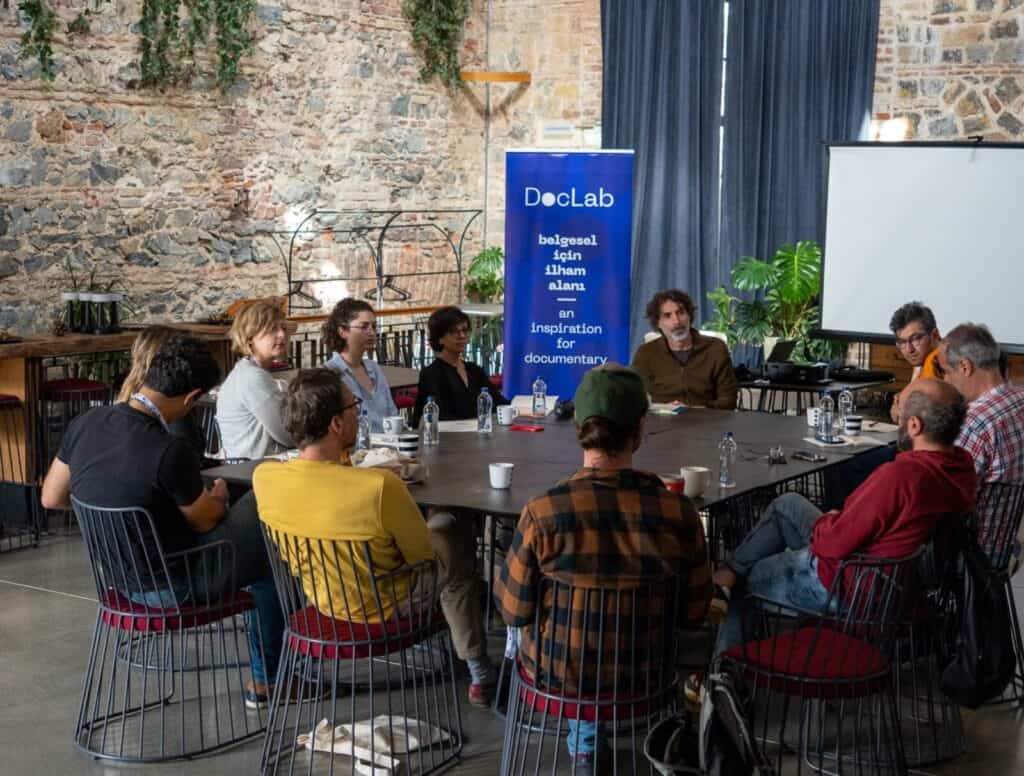
DocLab 2
April 22–27, 2024
Advisors: Aljoscha Begrich, Bruni Burres
Mentors: Bruni Burres, Aljoscha Begrich, Gurur Ertem, Dilek Aydın, Yelta Köm, Buse Yıldırım, Nino Kirtadze, Rabih Mroué
Participants: İdil Akkuş, Deniz Yüksel Abalıoğlu, Mahshid Afzali, Sonja Djekic, Javad Ebrahiminejad, Hesam Eslami, Imam Djabirowich Hasanov, Didem Kris, Berkay Tunalı
May 8–14, 2023
DocLab 1
May 8–14, 2023
Advisors: Aljoscha Begrich, Bruni Burres
Mentors: Dilek Aydın, Hannes Dereere, Gurur Ertem, Silke Huysmans, Nino Kirtadze, Yelta Köm, Miguel Ribeiro, S. Buse Yıldırım
Participants: Nazila Ahmadi, Tuğba Baykal, Can Eskinazi, Niam Itani, Bat-Dor Ojalvo, Rıza Efe Reis, Sahand Sarhaddi, David Schwartz, Zinnure Türe