26 July 2020
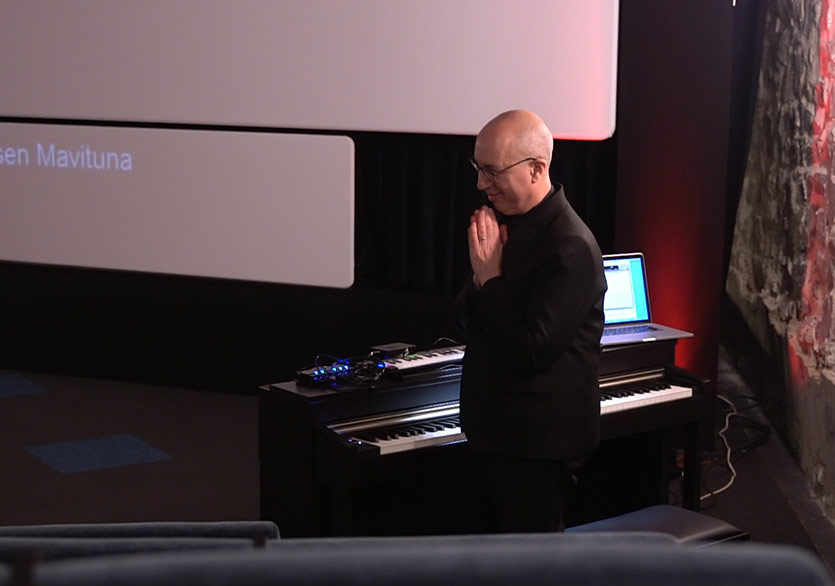
Having undergone a new transformation through Beykoz Kundura, whose cultural heritage it inherited, the organization has become one of the most important arts and culture organizations in Türkiye in recent years. The organization, which has held many film screenings under the name Kundura Sinema, is presenting “Silent Film with Live Music” and “Hollywood Classics” screenings as part of its November–December program. We spoke with Donald Sosin at Beykoz Kundura about Fritz Lang’s 1929 film Woman in the Moon, which was screened as part of this program.
First of all, I’d like to know how this whole adventure began, and how you decided to make music for silent films. How did it happen, and how did you decide on it?
Actually, it all started by accident. In the early 1970s I was at the University of Michigan for college. I was learning many different kinds of music and trying to play them. I played in restaurants for fun. Around that time, I would have dinner with a group of friends. Someone brought an instrument and I started to play. I was also playing for dance clubs at that time. That’s how I started, and during this period I also began watching people: how they moved, how they danced; their different styles of music, jazz, ballet or whatever kind… I could play many kinds of music. It was a lot of fun. Then nothing really happened. One day my composition teacher came and asked, “You know there’s going to be a screening of The Phantom of the Opera here, and you have the experience, why don’t you play something?” I said “okay” and thought about it. Ballet, opera, organ music; those were 20-minute performances, but this was around 90 minutes. So I started doing research. I was trying to figure out and understand what I needed to do. I wrote something and finished it. There were various films from the 1910s and ’20s, mostly from those periods, you know. Then we talked again. He asked me again: all these films have no sound or music, so why don’t you do something for them too? I said there was no piano there. He asked me, “If I get a piano brought into the auditorium, can you play music?” And I said, “Of course, why not?” My friend and I moved that very heavy equipment into the auditorium. They were quite old things and some of them didn’t even work. But we played like that in Michigan for 2 years and managed. Later I met someone who made music for The Museum of Modern Art (MoMA). We became friends and I started doing things for him too. I left college and went back to New York. Later he left MoMA and I took his place. That was really the whole beginning. Then I kept going. I met someone else, then someone else, and someone else… 20 years later I went to Pordenone in Italy for the Silent Film Festival and met even more people there.
To read the rest of the interview, click here.